
In short: the difference between TollRo and the rovinieta (Romanian road vignette) is the charging method and the type of vehicle targeted. The rovinieta is paid for a set period, regardless of kilometers traveled, and remains valid for cars, minibuses, coaches and freight vehicles up to 3.5 tons. TollRo applies to freight vehicles over 3.5 tons and is calculated based on kilometers traveled, Euro emission class and road type. The new system has applied since October 1, 2026.
For the full picture – who pays, rates, payment methods, and what happens to the rovinieta – see the complete TollRo 2026 guide.
TollRo is the hot topic of the moment. And yet many people still don't know the difference between TollRo and the rovinieta.
Under Law no. 226/2023, from October 1, 2026 the new toll applies, and hauliers must comply.
What is the difference between TollRo and the rovinieta?
Until recently, the rovinieta applied across the board to both small vehicles and trucks. Neither the weight nor the number of kilometers driven mattered.
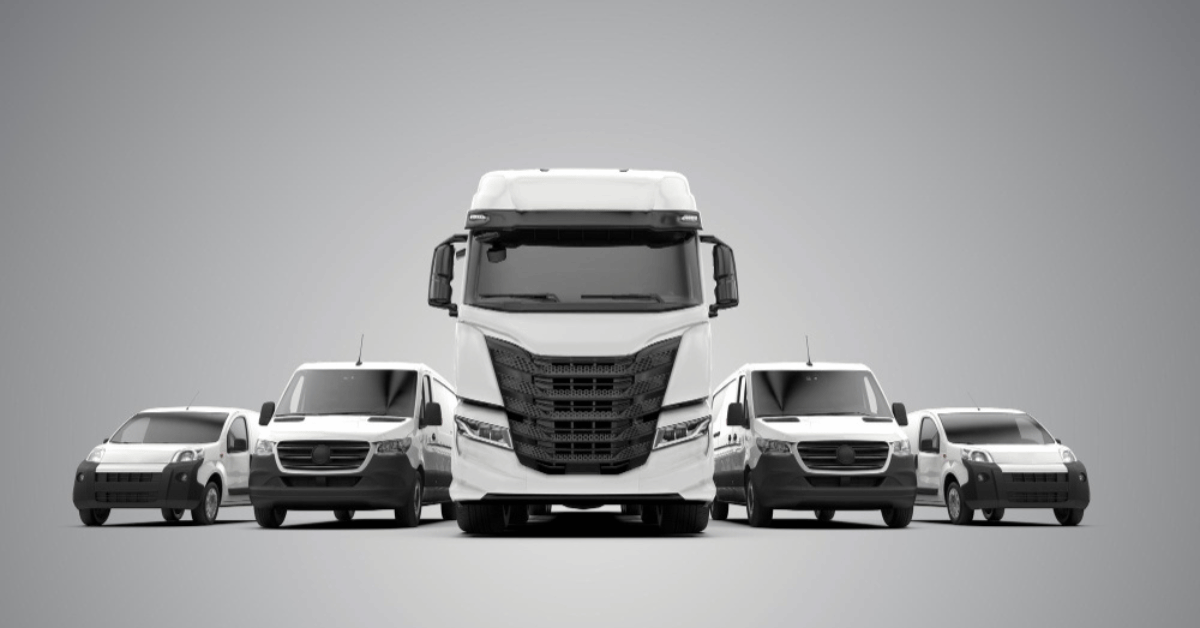
The rovinieta remains for cars, minibuses, coaches and goods vehicles up to 3.5 tons, while TollRo replaces the rovinieta for trucks. All goods vehicles over 3.5 tons pay the TollRo toll.
The difference between TollRo and the rovinieta is that the new toll is paid based on the number of kilometers traveled and the vehicle's Euro emission class.
The more a truck pollutes and the longer the distances it drives, the more it pays in TollRo.
This new charging model is more accurate and fairer, because it reflects each vehicle's real impact on infrastructure and the environment.
Does TollRo replace the rovinieta for trucks?
Yes. Trucks no longer pay the rovinieta but TollRo. This is the main difference between TollRo and the rovinieta.
Will the rovinieta still exist?
Yes. The rovinieta remains for cars, minibuses and coaches (regardless of weight), as well as for goods vehicles up to 3.5 tons.
TollRo is paid only by goods vehicles exceeding 3.5 tons and by mixed-use vehicles treated as such. Buses, minibuses and coaches do not switch to TollRo, even if they exceed 3.5 tons.
How much the rovinieta costs from October 1, 2026
For vehicles that stay on the rovinieta, rates are in lei and depend on the Euro class. For hauliers, the most relevant is category B, goods vehicles up to 3.5 tons:
| Euro class | 1 day | 10 days | 30 days | 60 days | 12 months |
|---|---|---|---|---|---|
| Euro 0 – Euro 3 | 67 lei | 90 lei | 142 lei | 225 lei | 752 lei |
| Euro 4 – Euro 5 | 59 lei | 79 lei | 126 lei | 199 lei | 665 lei |
| Euro 6 | 52 lei | 69 lei | 110 lei | 173 lei | 579 lei |
| Electric | 46 lei | 62 lei | 98 lei | 156 lei | 521 lei |
A car pays 228–330 lei for 12 months, a minibus 2,471–3,569 lei and a coach 4,326–6,249 lei (the lowest value is for electric vehicles). The full rates are on etoll.ro. Freight vehicles over 3.5 tons pay TollRo instead: between 0.08 and 0.62 lei/km for combustion-engine vehicles and 0.02–0.12 lei/km for electric trucks (since October 8, 2026), depending on weight, Euro emission class and road type.
How is the TollRo toll paid?
TollRo can be paid in two ways – with a route ticket or with a charging session in the TollRo app – and from January 15, 2027, the on-board unit is added. This is not an unheard-of system in Europe. In many EU countries, road tolls are paid in a similar way.
When they have trips in other EU countries, many hauliers choose to make their work easier and pay road tolls automatically, through on-board units from authorized providers that work in multiple countries. A GPS fleet tracking device does not pay TollRo.
Here are the payment options for the TollRo toll:
- The TollRo app and etoll.ro – the official channels of CNAIR (Romanian road infrastructure company), since October 1, 2026. You can pay the road toll in two ways: either you buy a route ticket before the trip (in the app, on etoll.ro, at CNAIR points of sale or at border crossings), or you start a charging session in the TollRo app (per kilometer, using the phone's GPS). For a session, you top up your account's e-wallet in advance; the app records the route, and the toll is deducted from the balance. You start the session before departure and close it at the end.
*Important: for the charging session, make sure the app has permission to access the phone's location. Without this permission, the route cannot be recorded and the session stops. - A contract with a service provider – ideal for hauliers who frequently run domestic routes and consistently use Romania’s roads. Under this contract, you enter into an agreement with a CNAIR-authorized provider, who will automatically handle road toll payments on the haulier’s behalf through an on-board unit. This option will only be possible from January 15, 2027.
Now that you know the difference between TollRo and the rovinieta, how do you pay TollRo now, and what will you choose from January 15, 2027? Every company has its own preferences, but when you have a large fleet and little time, on-board units – possible only from January 15, 2027, through CNAIR-authorized providers – end up being the simplest and fastest option. Until then, payment is made in the CNAIR system, with a route ticket or a charging session in the TollRo app.
Want to pay TollRo automatically?
Automatic payment with an on-board unit will be possible from January 15, 2027, through CNAIR-authorized providers. The CargoTrack solution is in the works and is not yet available. Join the waiting list and we’ll let you know when it launches.
After several postponements, the new system came into force on October 1, 2026. It is important to prepare in good time and avoid fines.
Frequently asked questions – The difference between TollRo and the rovinieta
What is TollRo?
TollRo is Romania's per-kilometer road toll, which replaces the rovinieta for freight vehicles over 3.5 tons starting October 1, 2026.
When did TollRo take effect?
The TollRo toll applies from October 1, 2026, at 00:00.
Who does TollRo apply to?
TollRo applies to freight vehicles over 3.5 tons.
Which vehicles pay TollRo?
All freight vehicles over 3.5 tons must pay TollRo. Here are a few examples:
Freight vehicles, in three rate categories, based on maximum authorized weight (MTMA):
- Freight vehicles with an MTMA over 3.5 tons and up to and including 7.5 tons (category I)
- Freight vehicles with an MTMA over 7.5 tons and under 12 tons (category II)
- Freight vehicles with an MTMA of 12 tons or more, regardless of the number of axles (category III)
- Mixed-use vehicles (passengers and freight), treated as freight vehicles
- Tractor units with semi-trailers (tractor-trailers)
Passenger vehicles – minibuses, buses, and coaches – do not pay TollRo, regardless of weight: they remain on the rovinieta.
Does TollRo also apply to passenger cars?
No. Cars continue to pay the rovinieta, as do minibuses, coaches, and freight vehicles up to 3.5 tons.
How is the TollRo toll calculated?
TollRo is calculated based on distance traveled, MTMA, Euro emission class and road type (highway/expressway or national road).
How much does TollRo cost per kilometer?
The TollRo toll is calculated per kilometer traveled, based on the vehicle's weight (MTMA), Euro emission class, and road type.
For vehicles with combustion engines, the rate ranges from 0.08 to 0.62 lei/km (VAT included). For 3.5–7.5-ton vehicles, the rate is 0.08–0.11 lei/km on national roads and 0.17–0.22 lei/km on highways and expressways.
For 7.5–12-ton vehicles, the rate is 0.14–0.19 lei/km on national roads and 0.29–0.37 lei/km on highways. Vehicles over 12 tons pay 0.24–0.31 lei/km on national roads and 0.48–0.62 lei/km on highways. Since October 8, 2026 (OMTI 959/2026), electric trucks have separate rates of 0.02–0.12 lei/km. Electric trucks pay the least, followed by Euro VI; Euro III–0 pay the most.
What is the difference between TollRo and the rovinieta?
- The rovinieta is purchased for a set period (e.g., 1 day, 10 days, 30 days, 60 days, or 12 months), regardless of how many kilometers are traveled, and remains in place for cars, minibuses, coaches, and freight vehicles up to 3.5 tons.
- TollRo, by contrast, is calculated based on distance traveled, MTMA, Euro emission class and road type and applies to freight vehicles over 3.5 tons.
How Do You Pay TollRo?
- The TollRo app and etoll.ro – the official channels of CNAIR (Romanian road infrastructure company), since October 1, 2026. You can pay the road toll in two ways: either you buy a route ticket before the trip (in the app, on etoll.ro, at CNAIR points of sale or at border crossings), or you start a charging session in the TollRo app (per kilometer, using the phone's GPS). For a session, you top up your account's e-wallet in advance; the app records the route, and the toll is deducted from the balance. You start the session before departure and close it at the end.
*Important: for the charging session, make sure the app has permission to access the phone's location. Without this permission, the route cannot be recorded and the session stops. - A contract with a service provider – ideal for hauliers who frequently run domestic routes and consistently use Romania’s roads. Under this contract, you enter into an agreement with a CNAIR-authorized provider, who will automatically handle road toll payments on the haulier’s behalf through an on-board unit. This option will only be possible from January 15, 2027.
Can I pay TollRo with a ticket?
Yes, TollRo can be paid with a route ticket, bought before the trip in the TollRo app, on etoll.ro, at CNAIR points of sale or at border crossings. If you have frequent trips on Romanian roads, you can use the charging session in the app or, starting January 15, 2027, an on-board unit from a CNAIR-authorized provider to make your work easier.
Can I pay TollRo automatically with a toll device?
Yes, but only from January 15, 2027: TollRo can then be paid automatically with an on-board unit (OBU) from a CNAIR-authorized provider. A GPS fleet tracking device does not pay TollRo.
What happens if I don't pay TollRo?
Anyone who drives without paying owes the toll: TollRo for the kilometers traveled, if the distance can be determined, or 2,000 lei, charged once per 12-hour period, if it cannot. If the amount due is paid on time, no penalties apply; the deadline is 72 hours from receipt of the notification letter (Law no. 226/2023, art. 19). Otherwise, the fine is 10 to 20 times the TollRo due or, if the distance cannot be determined, 5,000 lei. Fines apply from October 1, 2026. A bill that would suspend fines until March 31, 2027 was submitted to the Senate but has not been adopted. Exception: you are not penalized if you could not pay because of a platform malfunction and you tried before departure.
Does TollRo also apply on national roads?
Yes, TollRo applies on national roads, expressways, and highways. National roads within city limits are exempt, and TollRo does not apply on county and local roads.
Does TollRo also apply on highways?
Yes, TollRo applies on highways, expressways, and national roads.
What does MTMA mean for TollRo?
MTMA is short for Masă Totală Maximă Autorizată (maximum authorized weight). MTMA for TollRo refers to the maximum weight a vehicle can legally have when fully loaded – that is, the weight of the empty vehicle plus the maximum permitted load (cargo, fuel, passengers, etc.). This value is listed in the vehicle's registration certificate and is set by the manufacturer.
Which emission classes affect the TollRo toll?
The rate has four emission tiers: electric vehicles (lowest), Euro VI, Euro V–IV and Euro III–0 (highest). For example, for category III on highways: 0.12 / 0.48 / 0.55 / 0.62 lei/km.
Does TollRo replace the rovinieta for trucks?
Yes. Since October 1, 2026, at 00:00, trucks have paid TollRo instead of the rovinieta, and rovinietas bought for them before October 1, 2026 have expired. The value of the unused period is refunded only upon request. According to CNAIR, in its October 6, 2026 press release, the request can be filed only through the refund app that CNAIR will make available by December 29, 2026; the launch date will be announced on the CNAIR website. The money is refunded within 90 days of the request being registered in the app.
How does TollRo compare to HU-GO?
TollRo and HU-GO work on the same principle, i.e. charging based on the distance driven, the vehicle category and the Euro emission class, with payment via route ticket or on-board unit (OBU), the main difference being that HU-GO has been operational in Hungary for years, while TollRo has been running in Romania since October 1, 2026.
Who issues and collects TollRo?
TollRo is issued and collected by CNAIR (Romanian National Company for Road Infrastructure Administration). Under Law no. 226/2023, CNAIR is designated as the entity that charges and collects TollRo.