


Transport legislation

In short: the tax-free per diem has two simultaneous caps, and the lower of the two applies. The first is 2.5 times the legal rate — that is, 57.50 lei per day in Romania and, for most EU countries, 87.50 euros per day abroad. The second, less well known, limits the total to 3 base salaries relative to […]

ISCTR inspections come in two forms that hauliers treat the same way, even though they are nothing alike: the roadside stop, where one vehicle and one driver are checked, and the on-premises inspection, where the company is checked. The second one leads to the big fines, because that is where someone goes through the records of the entire business. Below: what inspectors can request […]

Many transport companies avoid dangerous goods because they think they are impossible to manage: a certified driver, an approved vehicle, a safety adviser, orange plates. In reality, a significant share of ADR transports can be carried out without any of these — as long as you know how to calculate. Below: the 9 hazard classes, the rule of […]

The CMR consignment note is the document that ultimately decides who pays when goods arrive missing or damaged. It takes a few minutes to fill out at loading and, in most cases, it is filled out carelessly — and the consequences show up months later, when the claim is already on the table. Below: what the CMR is, the 24 boxes […]

Dangerous goods are divided into 9 ADR classes, some of which have divisions: class 1 explosives (1.1–1.6), class 2 gases (2.1–2.3), class 3 flammable liquids, class 4 flammable solids (4.1–4.3), class 5 oxidizing substances and peroxides (5.1–5.2), class 6 toxic and infectious substances (6.1–6.2), class 7 radioactive material, class 8 corrosive substances and class […]

The ADR certificate — properly called the ADR certificate of professional training — is mandatory for any driver who transports dangerous goods. It is obtained after a course at an authorized center and an exam taken at ARR, the issuance fee is 250 lei, and it is valid for 5 years. There is more than one certificate: there are four competencies […]

The e-CMR is the consignment note issued and signed electronically, with exactly the same evidentiary value as the paper version. It is permitted by the Additional Protocol to the CMR Convention, adopted in Geneva on February 20, 2008, which Romania joined through Law No. 29/2019 — in force for Romania since June 12, 2019. The condition that matters […]

The standard CMR form has 24 numbered boxes: the sender mainly fills in boxes 1–5 and 9–15, the carrier boxes 6–8 and 16–21, and the consignee signs box 24 on delivery. The template used in Europe is the one developed by the IRU (International Road Transport Union), not one imposed by law. The CMR Convention specifies what data must be included […]

The CMR is the consignment note used in road freight transport: the document that proves the transport contract, the carrier’s receipt of the goods and the condition in which the goods were taken over. The name comes from the CMR Convention, signed in Geneva on May 19, 1956, which Romania joined through Decree No. 451/1972. […]
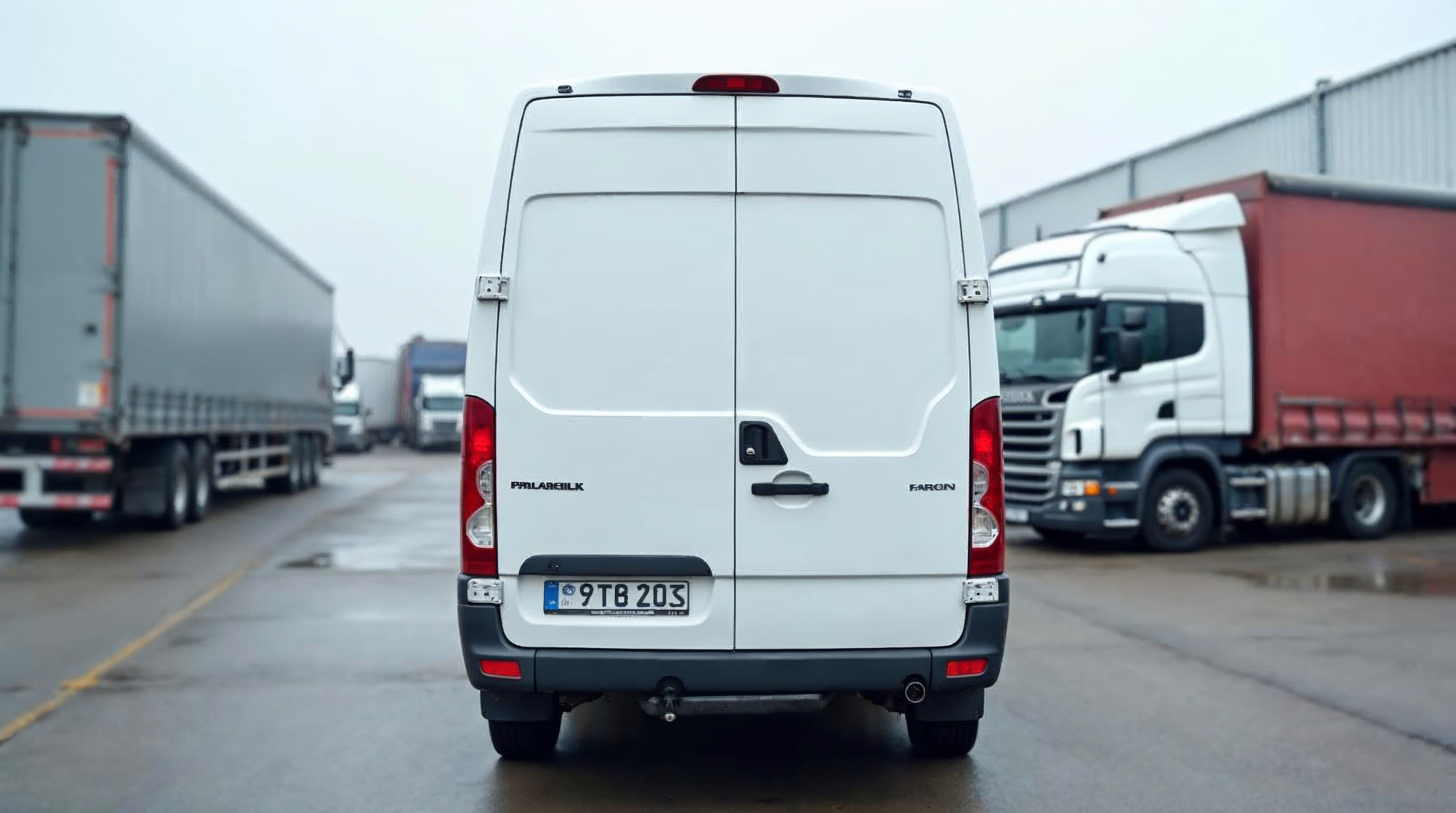
The tachograph is mandatory for freight vehicles with a maximum authorized weight above 3.5 tons, and starting July 1, 2026, also for those over 2.5 tons engaged in international transport or cabotage. The threshold is calculated based on the maximum authorized weight of the combination – vehicle plus trailer or semi-trailer – not on the weight of the cargo […]