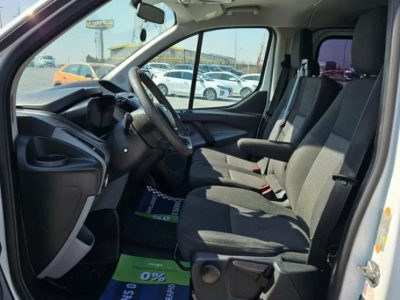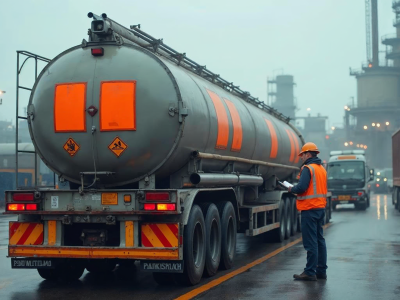


An ISCTR (Romanian State Inspectorate for Road Transport Control) inspection comes in two forms that hauliers treat the same way, even though they are nothing alike: the roadside check, where one vehicle and one driver are inspected, and the on-site inspection at company premises, where the company itself is inspected. The second one is where the big fines come from, because someone goes through the records of the entire operation.
Below: what inspectors can request, what they can retain, when they can immobilize a vehicle, which documents are actually checked, and how to contest the violation report (proces-verbal) if you were fined unfairly.
What ISCTR is and where its powers come from
The State Inspectorate for Road Transport Control (ISCTR) is the authority that checks compliance with road transport legislation in Romania. It operates under the Regulation on the organization and functioning of ISCTR of November 2, 2011, published in the Official Gazette (Monitorul Oficial).
Its jurisdiction covers both areas: on the road and at transport operators’ premises. It is not the traffic police — it does not deal with speeding or traffic rules, but with the professional side: licenses, certificates of professional competence, driving times, transport documents, and compliance with the conditions for access to the profession.
Roadside checks: what inspectors can do
The Regulation gives inspectors three categories of powers, in increasing order of severity.
Stopping and inspection
Inspectors may stop and inspect road vehicles registered in Romania or in other countries, signaling as required from a stationary position or from a moving vehicle. The fact that a vehicle has foreign plates does not place it outside their jurisdiction.
Retention of documents
They may retain, based on a violation report:
- certified true copy of the transport license or the Community license;
- the certified true copy of the own-account transport certificate;
- the route license;
- the international transport authorization.
The detail that matters: retention is done based on a violation report. Ask for it and check what it says before you sign — it is the document on which any later appeal will be built.
Vehicle immobilization — and the exception that saves the cargo
When violations are found, inspectors may immobilize the vehicle under safe conditions. There is, however, an exception few drivers know about, and it can save an entire load:
Immobilization does not apply to vehicles carrying live animals, perishable goods or temperature-controlled goods.
If you carry goods in these categories, state it explicitly during the inspection and make sure it appears in the violation report. The penalty still applies, but the vehicle can continue its journey — and the difference between a fine and a spoiled load is substantial.
On-site inspections: where the big fines happen
At the premises, the nature of the inspection changes completely. On the road, they look at one vehicle on one day. At the premises, they look at the company’s records over a period of time — and a systematic irregularity is multiplied by the number of vehicles and months.
Inspectors have the right to inspect any workplace and may request all documents within their remit. In practice, this means the operator’s entire compliance documentation.
What is checked, by category
| Area | What is checked |
|---|---|
| The company | The Community license, valid certified true copies for each vehicle, conditions for access to the profession (establishment, financial standing, transport manager) |
| Drivers | Certificates of professional competence (CPC), tachograph cards, employment contracts |
| Reporting | Reporting to ARR (Romanian Road Authority) of changes concerning drivers, within 15 days |
| Working times | Driving and rest times, periodic tachograph data download and archiving |
| Transports | Transport documents, including CMR consignment notes for international trips |
| Special cargo | For dangerous goods: ADR certificates, vehicle approvals, safety adviser |
Notice the pattern: almost every row is an obligation with its own deadline, which doesn’t appear in any calendar. A company that tracks them systematically passes the inspection; one that handles them one at a time, whenever it remembers, almost certainly has an irregularity somewhere.
How the fine is calculated
This is where a very common misconception lies. Government Ordinance (OG) no. 27/2011 does not set the amounts of the fines — article 85 paragraph (2) provides that contravention penalties are established by Government Decision.
The applicable decision is Government Decision (HG) no. 69/2012, which groups contraventions by article, while article 7 sets the amounts by group. Two examples from the group of serious offenses, punished with a fine of 4,000 lei to 6,000 lei, applied to the Romanian or foreign operator:
- art. 4 item 1 — failing to provide the driver with the certified true copy for presentation at roadside checks;
- art. 4 item 28 — failing to report to ARR changes concerning employed drivers within no more than 15 days.
Worth remembering, because the mistake is widespread: the range of 9,000–12,000 lei frequently cited in connection with missing documents refers to other contraventions, those under article 3 of the same decision. Always check the exact legal classification in the violation report, not the amount circulating on forums.
How to contest the violation report
A violation report is contested by filing a contravention complaint, under Government Ordinance (OG) no. 2/2001. The rules that matter in practice:
- Deadline: 15 days from the delivery or notification of the violation report. It is a short deadline and it runs regardless of whether the document reached the driver or the company.
- The complaint must state its grounds, with no option to add grounds later. Don’t file it “just to stop the clock” with the intention of arguing your case later.
- Filing suspends enforcement. Until the case is resolved, the fine is not enforced.
- If you don’t contest it in time, the violation report becomes an enforceable title.
Hence the importance of what is written in the violation report at the time of the inspection. Objections recorded on the spot — that the cargo was perishable, that the document existed but in a different form, that the tachograph data had been downloaded — are much harder to argue later if they weren’t noted at the time.
What actually reduces the risk
A roadside check is a lottery: either you have the documents on board or you don’t. An on-site inspection is not a lottery — it checks whether the company has a system or relies on memory.
- A single record of deadlines, with all expiry dates: certified true copies, certificates of professional competence, tachograph cards, ITP (periodic technical inspection), ADR approvals. Each has a different cycle, and in a fleet built up over time they are not in sync.
- Downloading tachograph data on time and archiving it. This is the most objective check in the entire inspection: the data either exists or it doesn’t. It can be done automatically and remotely through tachograph data reading and download.
- Reporting to ARR tied to the HR process, not to a separate reminder — on the same day a contract is signed or terminated.
- A standard document folder on board every vehicle, checked regularly. For European trips, the full list is in the guide on roadside checks and the documents requested.
Frequently asked questions
What documents can ISCTR request at a roadside check?
Inspectors can request and retain, based on a violation report, the certified true copy of the transport license or Community license, the certified true copy of the own-account transport certificate, the route license and the international transport authorization, along with documents on the transport, the driver and driving times.
Can ISCTR immobilize the truck?
Yes, when violations are found during the inspection, the vehicle is immobilized under safe conditions. The exception is vehicles carrying live animals, perishable goods or temperature-controlled goods.
Can ISCTR stop vehicles registered in another country?
Yes. The Regulation expressly provides for the right to stop and inspect road vehicles registered in Romania or in other countries.
What is checked during an on-site inspection?
Inspectors have the right to inspect any workplace and may request all documents within their remit: the license and certified true copies, drivers’ certificates of professional competence and tachograph cards, reports submitted to ARR, driving and rest times, tachograph downloads, transport documents and, where applicable, ADR documentation.
How much is an ISCTR fine?
It depends on the legal classification. The amounts are not set in OG no. 27/2011 but in HG no. 69/2012, which groups the contraventions, while article 7 sets the amounts by group. Serious offenses under article 4, such as failing to provide the driver with the certified true copy or failing to submit reports to ARR, are punished with a fine of 4,000 lei to 6,000 lei.
How long do I have to contest the violation report?
Within 15 days of the delivery or notification of the violation report, by filing a contravention complaint under OG no. 2/2001. The complaint must state its grounds, with no option to add grounds later, and filing it suspends enforcement of the penalty.
What happens if I don’t contest it in time?
The violation report becomes an enforceable title and the fine is enforced. That’s why the 15-day deadline must be tracked from the moment of notification, not from the moment the document reaches the company’s management.