

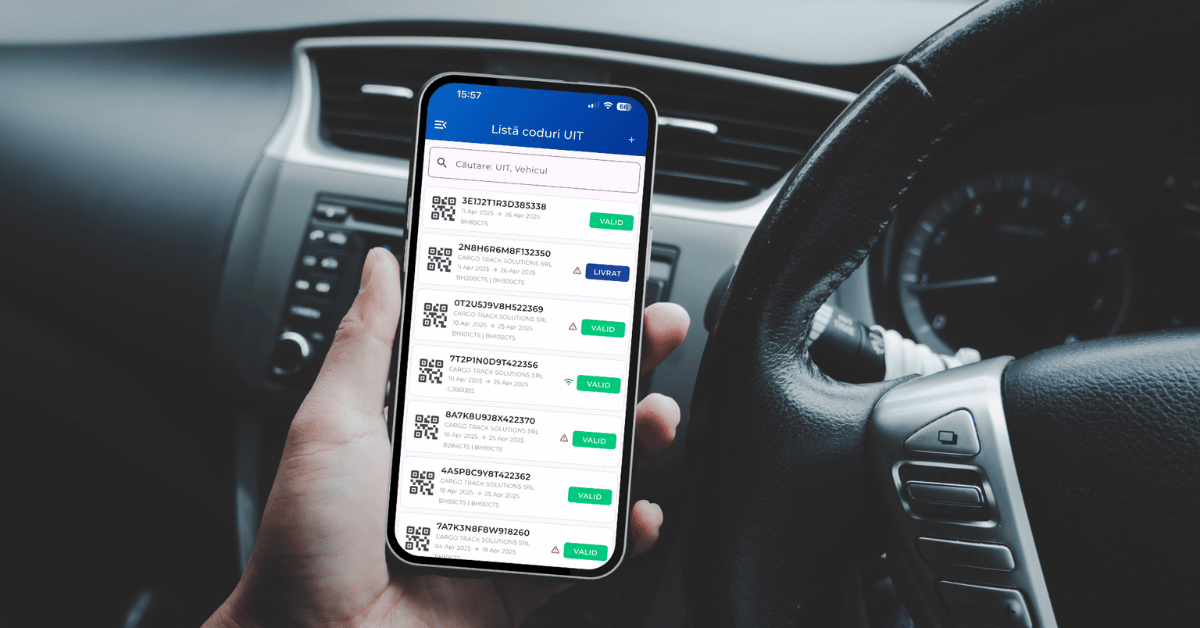
The RO e-Transport system requires all high fiscal risk goods to be declared to ANAF (Romanian tax authority). The UIT code is mandatory whether you run intra-community transportor international transport.
There’s a lot of information on this topic, and it often isn’t explained the way it should be. In this article, we’ll cover whether a UIT code is needed for intra-Community transport and everything related to this code.
What is the UIT code?
The UIT code is a unique code generated automatically by the RO e-Transport system when a valid transport declaration is registered.
With this code for intra-Community transport, the authorities can track exactly:
- what goods are being transported,
- who the shipper and consignee are,
- where they depart from and where they arrive,
- as well as the time period of the transport.
In practice, the UIT is like a personal ID number for the shipment, and without it, the vehicle cannot legally travel if it is carrying goods in the high fiscal risk categories.
The UIT code is a unique alphanumeric string of 36 characters (letters and digits), generated automatically by the system ANAF.
This code cannot be changed or generated manually. It is assigned automatically to each newly declared transport and is never repeated.

Is a UIT code required for intra-Community transport?
Yes, if the goods transported are on the list of high fiscal risk goods it is also needed for intra-Community transport. All such transports with unloading or loading in Romania must be declared in e-Transport and therefore require a UIT code.
The only transports not affected are those in transit.
How long is a UIT code valid?
The UIT code must be entered and activated before the transport starts, then sent automatically via GPS to ANAF throughout the vehicle’s journey.
Once the goods reach their destination, the UIT code becomes inactive and cannot be reused.
After it is generated, the UIT code remains active for:
- 5 days for domestic transports;
- 15 days for intra-Community transports.
After this period expires, the code becomes inactive, and the transport must be declared again if it was not carried out within the validity period.
Who must have the UIT code
Whether it’s intra-Community or domestic transport, the UIT code must be:
- generated by the entity required to file the declaration (buyer, supplier, warehouse keeper, as applicable);
- communicated to the haulier and the driver so they can present it to the authorities during an inspection.
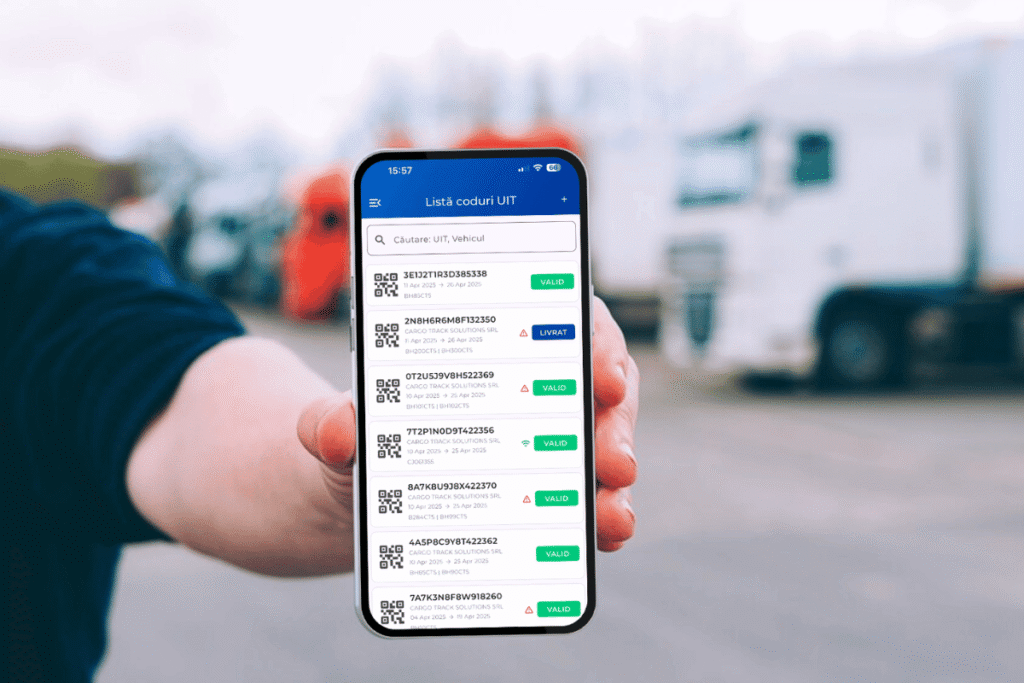
The code must be clearly displayed on the transport documents (CMR, delivery note, invoice, etc.) or in digital format (for example, in the GPS provider’s app).
How do you get a UIT code?
The UIT code is obtained automatically when the transport is declared in the RO e-Transport system, managed by ANAF. It is not generated manually and cannot be requested separately; it appears immediately after all the data in the transport declaration has been completed and validated.
However, this is not done by the haulier. As a transport operator, you don’t have to generate the UIT code, but you must have it and present it in case of an inspection.
How is the UIT code used?
The UIT code must be stated on the transport documents, such as the invoice, the CMR or the delivery note accompanying the goods, so that the authorities can check it during an inspection.
The code must also be communicated to the driver before departure so they can present it on request. In addition, if the vehicle is equipped with a GPS monitoring system that sends data to ANAF, the UIT code must also be entered into that system, so the declared transport can be matched with the vehicle’s real-time position.
Complying with the obligation to declare transports in the RO e-Transport system and to use the UIT code correctly is very important in the current context. Enforcement of fines has been postponed several times, but the final deadline for GPS monitoring is now approaching.
It is essential that everyone involved in the transport process (from the shipper to the driver) knows the rules for obtaining, using and the validity of the UIT code. Good organization and the use of GPS solutions compatible with the e-Transport system can make it easier to meet these obligations and help avoid penalties.
Are you ready for this measure? If you still need GPS equipment to send data to ANAF, Contact us, and we’ll help you with a complete solution.
FAQ about the UIT code
What is the UIT code?
The UIT code is a unique 36-character alphanumeric code generated automatically by the RO e-Transport system (ANAF) when a valid transport declaration is registered. Without a UIT code, a vehicle cannot legally carry high fiscal risk goods.
Is the UIT code mandatory for intra-Community transport?
Yes. All transports of high fiscal risk goods with loading or unloading in Romania must be declared in e-Transport and require a UIT code. The only exception is transports in transit.
How long is a UIT code valid?
The UIT code remains active for 5 days for domestic transports and 15 days for intra-Community transports. After it expires, it becomes inactive, and the transport must be declared again if it was not carried out.
Who generates the UIT code?
The UIT code is generated by the entity required to file the declaration — the buyer, supplier or warehouse keeper, as applicable — not by the haulier. The haulier receives the code and must present it to the authorities during an inspection.
Where must the UIT code be stated?
The UIT code must be stated on the transport documents (CMR, delivery note, invoice), communicated to the driver before departure and entered into the GPS monitoring system that sends data to ANAF.