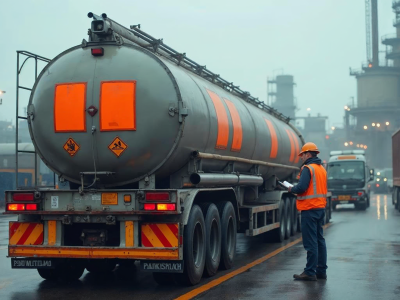


Fuel fraud is caught by correlating the tank level with the GPS position and fuel receipts — not by checking a single data source. As long as you only look at receipts, only at average consumption or only at the fuel sensor graph, any fraud pattern can be masked. Overlay all three sources and discrepancies become visible almost immediately.
This article is written for fleet managers: what anomalies show up in the data when there’s a fuel problem, and which prevention measures work in practice. We don’t describe theft methods — only the signals they leave behind.
Why fuel is the most vulnerable cost line
Fuel is the second-largest expense after personnel and the easiest to erode: it’s consumed continuously, measured indirectly and, without monitoring, justified solely by documents issued by third parties. The difference between a fleet that controls it and one that doesn’t isn’t the honesty of the drivers, but the ability to verify.

Types of fuel fraud in fleets
Fuel losses in fleets fall into a few categories. We present them from the perspective of the footprint they leave in the data, because that’s where detection happens.
1. Fictitious refuelings and receipts that don’t match reality
The accounting document exists, but the fuel never reaches the tank. The data footprint is distinctive: the receipt shows 300 liters, but the tank level doesn’t rise at all or rises much less. Sometimes the vehicle wasn’t even at that station at the time of the transaction.
- Card transaction without a corresponding rise in the tank level.
- Invoiced quantity greater than the tank’s physical capacity.
- The vehicle’s GPS position at the time of the receipt doesn’t match the station’s address.
2. Siphoning from the tank
Fuel physically disappears from the tank — external theft in unsecured parking lots, or internal losses. The signature in the data is the clearest: a drop in level while the vehicle is stationary.
A tank doesn’t lose dozens of liters while parked, so any significant drop with the engine off is an anomaly worth checking. The context is detailed in the article on diesel theft and available solutions.
3. Tampering with or disconnecting the sensor
Once a fuel level sensor is installed, the pressure shifts to the equipment — hence the frequent question, “Can a fuel level sensor be tricked?” The honest answer is that any attempt to tamper with the sensor or its power supply itself produces a detectable anomaly, if the system is configured correctly.
We don’t describe tampering methods. What matters is what such a situation looks like in the report:
- Data gaps — periods with no transmission, followed by a resumption at a lower level.
- “Frozen” values — the level stays identical for hours, even though the vehicle is moving.
- Unstable readings — fluctuations that don’t match any operating mode.
- Disconnection alerts or seal break alerts, right before a period with no data.
Paradoxically, a sensor’s silence is a stronger signal than its noise: a sensor that “says nothing” when it should have said something is itself information.
4. Refueling off-route or outside working hours
Transactions made at night, on weekends, at stations far from the route corridor, or in very quick succession. Each may have a legitimate explanation, but together they form a pattern worth checking.
Warning signs in reports: reference table
The table below works as a monthly checklist. Important: a single signal is not proof, but a reason to check.
| Warning sign in the data | What it may mean | What to check |
| Sudden level drop with the vehicle parked and the engine off | Siphoning from the tank or, less often, a technical leak | GPS position at the time of the drop, parking duration, condition of the tank and fuel cap |
| Fuel receipt without a corresponding level rise | Fictitious refueling, inflated quantity on the receipt, or filling another tank | Transaction time vs. GPS position; invoiced liters vs. actual level rise |
| Level rise with no receipt on record | Undeclared refueling, possibly from unauthorized sources | Location and time of the rise, match with known stations |
| Rising average consumption on a single vehicle, with no change in route or load | Recurring small losses or a genuine technical problem | Comparison with identical vehicles on the same routes, service history |
| Periods with no data from the sensor, followed by a lower level | Interruption of the sensor’s power supply or tampering with the installation | Disconnection alert log, seal integrity, exact time of the data gap |
| Constant level for hours even though the vehicle is moving | Sensor stuck, faulty or affected by tampering | Technical check of the sensor, recalibration, comparison with the odometer |
| Refueling at a station outside the route corridor | Unjustified detour or use of the card for another vehicle | Full GPS route for the day, trip sheet, dispatcher approval |
How a fuel level sensor actually works
A fuel level sensor (probe) is a sensor installed in the tank that continuously measures the fuel level and sends the value to the GPS tracking system. Unlike the dashboard gauge, the sensor produces a continuous level curve, correlated in real time with the vehicle’s position and engine status.
The curve is the audit tool: refuelings show up as upward jumps, normal consumption as a gentle slope, anomalies as breaks in the pattern. Details on how it works and how it’s calibrated are in the dedicated guide — fuel level sensors and fuel consumption monitoring — and the specifics of heavy vehicles are covered in the article on fuel level sensors for trucks.
An essential and often overlooked aspect: correct calibration. Tanks don’t have a regular geometric shape, so the relationship between level and liters isn’t linear. An uncalibrated sensor produces errors that can be mistaken for fraud — or can hide real losses.
How to prevent fuel fraud
Prevention isn’t a piece of equipment, but a combination of technical measures and internal procedures.
Technical measures
- Sealing the installation. The sensor, wiring and connection points are sealed at installation, and the condition of the seals is checked periodically and recorded in writing.
- Disconnection and power interruption alerts. The system must immediately report any signal loss — not in the end-of-month report.
- Sudden drop alerts while parked, with a threshold tailored to the vehicle so they don’t generate unnecessary noise.
- Locking fuel cap or anti-siphon device, as an additional physical barrier in parking lots.
- Correct calibration at installation and recalibration after any work on the tank.
Correlating the three data sources
This is the measure with the greatest impact. Every refueling in the accounts must have three independent confirmations: the receipt, the GPS position at the time of the transaction, and the level jump in the tank. If one is missing or doesn’t match, the transaction is automatically flagged for review.
An integrated GPS tracking solution with a fuel level sensor and alerts does the correlation automatically, instead of the manager manually comparing hundreds of rows against separate charts. The practical difference: problems surface on the day they happen, not at a reconciliation six weeks later.
Internal procedures
- One card per vehicle, with quantity and frequency limits set according to tank capacity.
- Approved station network, with refueling outside it only with prior approval.
- Mandatory monthly reconciliation between invoices, sensor data and routes, with a written report even when nothing is found.
- Transparent rules communicated to the team. Drivers need to know what is being monitored and how the data is interpreted — the preventive effect of transparency is greater than that of surprise.
- Alert handling procedure — who receives alerts, how quickly they’re checked, what steps follow. An alert that nobody reads prevents nothing.
A structured approach to these measures is also described in the material on preventing and monitoring fuel theft.
Common mistakes that leave the fleet exposed
- Installing the sensor without configuring alerts: the data exists, but nobody reads it.
- Alert thresholds that are too sensitive, generating dozens of false notifications and leading to all of them being ignored.
- Analyzing average consumption as the only indicator — the average hides exactly the small, repeated patterns.
- Mistaking an anomaly for guilt: technical faults produce similar signals too.
Fuel control doesn’t mean suspicion toward drivers — it means eliminating the gray areas where nobody can prove anything. A system in which every liter has a verifiable explanation protects both the company and the honest people on the team.
If you want to assess which fuel level sensor monitoring solution fits your fleet and how alerts are configured, Contact us and we’ll look at your specific situation together.
Frequently asked questions
Can a fuel level sensor be tricked?
Any equipment installed on a vehicle can be the target of a tampering attempt, but a correctly installed sensor can’t be affected without leaving traces in the data: transmission gaps, frozen values, disconnection alerts. Real protection comes from sealing, configured alerts, and correlating the fuel level with the GPS position and receipts.
How can I tell if diesel is being stolen from the tank?
The clearest sign is a drop in level while the vehicle is parked with the engine off. Then check the GPS position at that moment, how long the vehicle was parked, and whether there’s a technical explanation, such as a leak.
What is a fictitious refueling and how do I detect it?
It’s a transaction that appears in the documents but has no matching fuel in the tank. It’s detected by comparing the liters on the receipt with the actual level jump and checking whether the vehicle was at that station at the time of the transaction.
What makes diesel anti-theft protection effective?
A combination of a physical barrier (locking fuel cap or anti-siphon device) and an information barrier (fuel level sensor with real-time alerts). The physical barrier deters, while monitoring documents incidents and enables a quick response.
How accurate is a fuel level sensor?
Accuracy depends decisively on calibration to the specific tank, because tanks don’t have a regular shape. A correctly calibrated sensor gives a much finer reading than the dashboard gauge and detects variations of just a few liters.
What do I do if the sensor stops transmitting data?
Treat the interruption as an incident, not a routine fault: note the time of the data gap, check the level before and after, the seals and the wiring, then request a technical inspection. Many causes are purely technical, but the procedure stays the same.
Is it legal to monitor the fuel consumption of company vehicles?
Yes, monitoring vehicles owned or managed by the company is common practice in transport. The condition is that employees are informed in advance, in writing, about the existence of the system, the purpose of the monitoring and the data collected.
How quickly does an investment in a fuel level sensor pay for itself?
It depends on fleet size, monthly consumption and the level of losses before implementation. A realistic estimate requires the fleet’s actual data — real figures say more than any general percentage.