
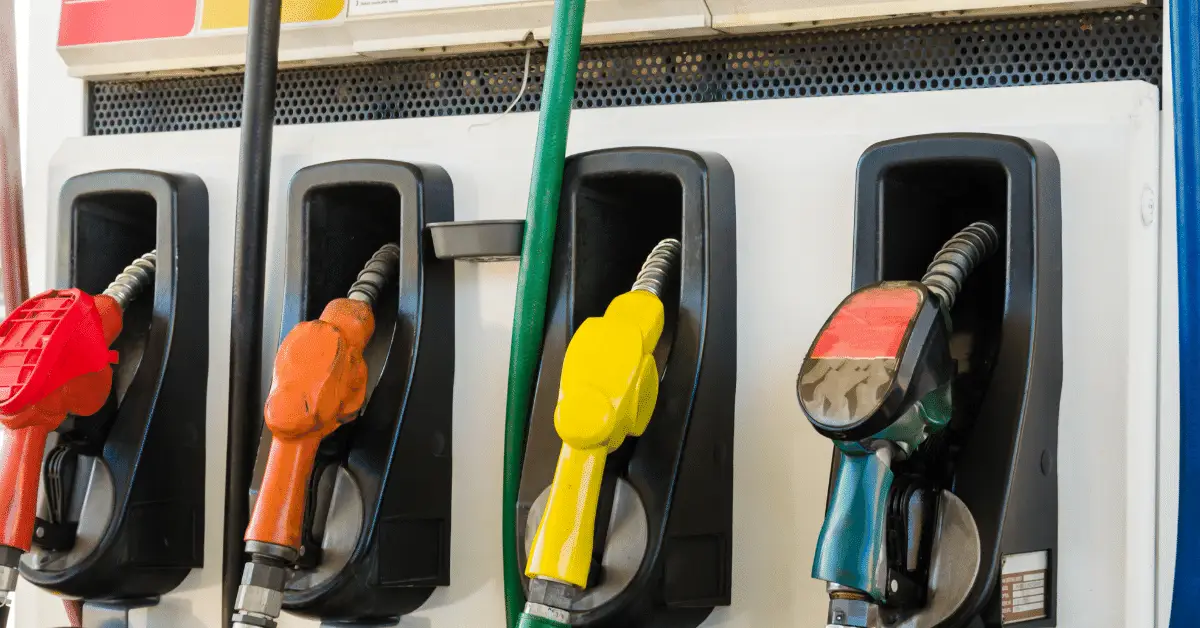
In short: the state aid of 50 bani per liter of fuel was a temporary scheme established by Government Decision (HG) no. 667/2022, with a cap of 400,000 euros per company and an estimated budget of 300 million lei. The scheme was administered by the Romanian Road Authority (ARR), grant decisions were issued until December 31, 2022, and payments could be made until July 31, 2023. Today, support for hauliers is provided through a new scheme that compensates for the diesel excise duty increase, established by H.G. no. 1.094/2025.
Many of you have probably already heard about the government’s decision to grant hauliers state aid of 50 bani per liter of diesel.
The Government spokesperson, Dan Cărbunaru, announced that approximately 3,000 road freight and passenger transport operators will benefit from a 300 million lei state aid scheme to offset rising fuel prices.
The state aid for hauliers amounts to 50 bani per liter of fuel, but no more than 400,000 euros per company, in the lei equivalent.
Starting June 27, 2022, ARR will make available to hauliers the online system for administering the state aid scheme, used to submit compensation applications and supporting documents.
The state aid will be granted to hauliers licensed in Romania or in other European Union member states that carry out road freight transport on own account or for hire, or local public transport, including regular passenger transport.
State aid decisions for hauliers will be issued until December 31, 2022, and the actual payment can be made until July 31, 2023, inclusive.
Official announcement on the 50 bani per liter fuel state aid for hauliers

Conditions for receiving the 50 bani per liter fuel state aid for hauliers
Hauliers that meet the following conditions are eligible for state aid:
- They are licensed in Romania or in other European Union member states;
- They own at least one eligible vehicle;
- Hauliers established in Romania must not be listed as inactive under the Fiscal Procedure Code, must not be temporarily inactive as recorded in the Trade Register, and must not receive other compensation for transport activities carried out with eligible vehicles, except for those providing local public transport;
- No decisions to recover state aid have been issued against them or, where such decisions have been issued, they have been enforced in accordance with the legal provisions in force;
- They refuel their vehicles at filling stations operated by economic operators or from their own fuel tanks for internal consumption;
- They are not in bankruptcy, enforcement proceedings, dissolution, operational closure or liquidation;
- They have not applied for other types of state aid for the same costs;
- Hauliers licensed in other European Union member states must submit a sworn statement showing that they carry out road freight transport on own account, as well as a list of eligible vehicles used for road freight transport for hire or on own account, and that they hold a Community license for passenger transport as well.
How to submit the compensation application
State aid can be requested by submitting an application to the Romanian Road Authority for all vehicles owned during the quarter for which compensation is requested, starting on the first day of the quarter following the one for which the state aid is requested.
Eligible expenses include invoices issued up to 30 working days before the publication in the Official Gazette (Monitorul Oficial) of the decision.
The Ministry of Finance, the National Agency for Fiscal Administration (ANAF, the Romanian tax authority) and the Romanian Road Authority – A.R.R., through the Ministry of Transport and Infrastructure, will sign a cooperation protocol for sharing the haulier information needed to assess applications.
Documents required to apply under the state aid scheme
As mentioned above, to request the state aid, hauliers submit to the scheme administrator an application for compensation of the fuel price increase, following the template in Annex no. 1.
The state aid application must be accompanied by the following documents, submitted in electronic format:
- a copy of the tax registration certificate/VAT registration certificate;
- a copy of the contract(s) signed with the issuer of the fuel management card or the issuer of the transmitter/receiver ring, as applicable;
- a copy of the proof of ownership of the electronic fuel dispenser provided for in art. 5 para. (1) letter f) item (ii), for economic operators established in Romania;
- a sworn statement showing that they meet the conditions provided for in art. 5 para. (1) letters c) and d);
- a sworn statement showing that they meet the conditions provided for in art. 5 para. (1) letters e)-l);
- the sworn statement on the company’s classification as a small or medium-sized enterprise, provided for in Annex no. 1 to Law no. 346/2004 on stimulating the establishment and development of small and medium-sized enterprises, as subsequently amended and supplemented, or, as applicable, a sworn statement showing that the economic operator is not classified as a small or medium-sized enterprise;
- where vehicles are refueled at the filling stations of economic operators registered under Law no. 227/2015, as subsequently amended and supplemented, as retailers of energy products, a summary statement of the fuel quantities dispensed to each eligible vehicle, drawn up according to the template in Annex no. 2, together with copies of the fuel purchase invoices issued by the filling stations or by third parties. The summary statement is drawn up based on the information in the fuel purchase invoices and their annexes;
- where vehicles are refueled from the company’s own fuel tanks, a summary statement of the fuel quantities dispensed to each eligible vehicle, drawn up according to the template in Annex no. 2, together with copies of the fuel purchase invoices. This statement is drawn up based on the information stored on the electronic storage units provided for in art. 5 para. (1) letter f) item (ii);
- a copy of the document proving ownership of the type 50.70 account “Available from subsidies and transfers,” opened at the State Treasury unit in whose area the company has its tax domicile, for economic operators established in Romania, or of the bank account, for economic operators established in other member states;
- copies of the CMR consignment notes provided for in the Convention on the Contract for the International Carriage of Goods by Road, for the transports for which compensation is requested, in the case of economic operators established in other member states that carry out road freight transport on own account.
- Fuel purchase invoices must contain the information required by Law no. 227/2015, as subsequently amended and supplemented.
- Invoices for fuel refills and their annexes are usually issued by the filling stations, when the fuel management cards or transmitter/receiver rings are managed by these stations. When the fuel management cards or transmitter/receiver rings are managed not by the filling stations but by third parties, the latter will issue the invoices for fuel refills and their annexes.
- For economic operators that refuel directly at the filling stations of economic operators registered under Law no. 227/2015, as subsequently amended and supplemented, as retailers of energy products, the invoice annexes must include at least the following information: the filling station, the date of refueling, the registration number of the refueled vehicle, the identification number of the fuel management card or, as applicable, of the transmitter/receiver ring, the quantity of fuel dispensed in liters for each vehicle, and the odometer reading at the time of refueling.
- Fuel purchase invoices cannot, on their own, justify consumption for the purpose of granting state aid.
Supporting documents for the state aid must be kept for 10 years
State aid recipients must keep certain documents for 10 years; otherwise, they may be fined 5,000 – 10,000 lei.
Documents you must keep if you apply for state aid:
- the stock records for each own-consumption tank held at their refueling points, and the consumption slips for each refueling of eligible vehicles from that tank. These must include at least the following information: the date of refueling, the registration number of the refueled vehicle, the quantity of fuel dispensed in liters for each vehicle, and the odometer reading at the time of refueling;
- the tachograph records from the first and the last day of the quarter for which the state aid application is submitted;
- the documents proving the right to hold the vehicles for which state aid is granted;
- the sale, export or scrapping documents for all vehicles whose consumption is included in the application;
- the annexes to the fuel purchase invoices;
Case study – Fuel taxes and prices in Romania
At the European Institute for Economic Studies, three academics (from the University of Bucharest, the Bucharest University of Economic Studies and Babeș-Bolyai University in Cluj-Napoca) conducted a study on the taxes and excise duties applied to the production, distribution and sale of fuel in Romania. According to the study, these account for a significant share of the price paid by end consumers. (The data was analyzed when prices were lower than they are now.)
The excise duty on diesel is 2,052.89 lei/ton (1.73 lei/liter), and the excise duty on gasoline is 2,458.10 lei/ton (1.89 lei/liter).
On April 25, 2022, a liter of gasoline cost an average of 7.84 lei “at the pump,” and diesel 8.72 lei. Without VAT and excise duties, a liter of diesel would have cost 5.6 lei and a liter of gasoline 4.7 lei.
An analysis of the prices shows that no less than 36% of what is paid for diesel and 39% of what is paid for gasoline goes to the state budget as excise duties and VAT.
Radu Nechita, Associate Professor at Babeș-Bolyai University in Cluj-Napoca, argues that fuel prices affect the prices of all products on the market. This creates a domino effect that leads to a general rise in prices, which in turn affects the exchange rate used to calculate the excise duty. The result is a vicious circle that makes products and services even more expensive and further erodes Romanians’ purchasing power.
What other European countries did
In Hungary, diesel and gasoline prices were capped at 480 forints per liter. At an exchange rate of 0.0132 lei per forint, that means 6.33 lei per liter of gasoline and diesel.
This cap of 480 forints per liter was imposed by the Hungarian government back in the fall of last year.
Later, as you may have heard, the legislation was changed to apply only to vehicles registered in Hungary, because of fuel tourism.
In early May, Energy Minister Virgil Popescu said that each country sets its own pricing policy and that lowering prices requires reducing taxes, which falls under the Ministry of Finance.
15 European countries decided to cut fuel excise duties for various periods of time.
These countries are: Belgium, Croatia, Cyprus, France, Germany, Greece, Hungary, Ireland, Italy, Malta, the Netherlands, Poland, Portugal, Slovenia and Sweden.
Beyond all this, hauliers must also keep in mind other legislative changes introduced by the Mobility Package, such as: The IMI declarations and Transport licenses for 3.5 t vehicles.
Get the state aid quickly and easily
Transport is a field where changes happen often and it can be hard to keep up with them, so CargoTrack supports hauliers with a range of solutions that make their work easier.
The time spent researching and preparing the paperwork required for each driver can be saved with the services we provide.
CargoTrack offers you free support and consultancy on the documents required in transport.
We know that getting state aid can also be difficult for you if the documentation is not prepared and submitted following the correct procedure.
That’s why you can turn to the CargoTrack team, who will inform and advise you and submit this application on your behalf to the competent authorities.
How about we help you with these documents?
Don’t worry, you’ll receive FREE consultancy from our specialists at every step, to make this process as easy as possible for you!
Because we have experts who continuously follow the legislation and every development, we can help you get this state aid very easily.
This state aid scheme also has a limited budget, so we recommend applying for it as soon as possible.
Frequently asked questions about diesel state aid
Can you still get the 50 bani per liter diesel state aid?
No. The 50 bani per liter scheme was a temporary measure, established by Government Decision (HG) no. 667/2022 to offset the fuel price increase caused by the armed conflict in Ukraine. Applications were submitted to the Romanian Road Authority, grant decisions were issued until December 31, 2022, and the actual payment could be made no later than July 31, 2023. The scheme is closed.
Which diesel compensation scheme is currently active for hauliers?
The current support is the scheme compensating for the diesel excise duty increase, established by Government Decision (HG) no. 1.094/2025, published in December 2025. The aid is 40 bani per liter for diesel purchased between October 1 and December 31, 2025, and 65 bani per liter for the period January 1 – March 31, 2026. The administrator is again the Romanian Road Authority, and applications are submitted online.
What was the maximum state aid per company under the 2022 scheme?
The aid was 50 bani for every liter of fuel refueled, but no more than the lei equivalent of 400,000 euros per company. The scheme’s total estimated maximum budget was 300 million lei, and the estimated number of beneficiaries was approximately 3,000 road freight and passenger transport operators. The amount was calculated based on the quantities actually refueled.
Who could receive fuel state aid in 2022?
Eligible applicants were economic operators licensed in Romania or in another European Union member state that carried out road freight transport for hire or on own account, as well as regular passenger transport, including local public transport. Additional conditions were owning at least one eligible vehicle, not being fiscally inactive, bankrupt or under enforcement proceedings, and not receiving other compensation for the same costs.
What documents had to be submitted with the fuel compensation application?
The application, drawn up according to the template in the decision’s annex, was submitted electronically together with the tax registration certificate, the contracts with the fuel management card issuer, the sworn statements on meeting the eligibility conditions and on SME status, a summary statement of the quantities refueled for each vehicle, copies of the fuel invoices and proof of the account opened with the State Treasury.
How long must supporting documents for state aid be kept?
Supporting documents are kept for 10 years from the date the compensation application is submitted. These include the stock records for own-consumption tanks, the consumption slips, the tachograph records from the first and last day of the quarter for which the application was submitted, the documents proving the right to hold the vehicles, and the annexes to the fuel purchase invoices. Failure to comply with this obligation is a contravention.
How do you apply for diesel excise duty compensation today?
Applications are submitted exclusively online, through the IT system provided by the Romanian Road Authority at compensareacciza.arr.ro. Applications are filed quarterly, within windows set by the administrator: for Q4 2025 the window was January 1–30, 2026, and for Q1 2026, April 1–30, 2026. Access accounts from previous schemes cannot be used, so a new registration is required.