

In short: You don't need a vignette for cars in Germany: motorways remain free in 2026 as well, the only exceptions being the Warnow and Herren tunnels. In contrast, goods vehicles with a technically permissible maximum laden mass over 3.5 tons pay the LKW-Maut toll, calculated per kilometer through the Toll Collect system — roughly between 15.1 and 34.8 cents/km for a Euro VI truck in CO2 class 1. Non-payment leads to retroactive recovery of the amount plus fines that usually reach up to 480 euros, and up to 20,000 euros for serious or repeated violations.
Germany is a destination Romanians visit often, whether on business, on vacation or to carry out a transport. To drive on German roads, however, you need to factor in the costs of the Germany vignette.
Road tolls in Germany in 2026: what has changed
Nothing has changed for cars: German motorways remain free in 2026 as well, and the plan for a car vignette (Pkw-Maut) was definitively abandoned in 2019, following the ruling of the EU Court of Justice. The only exceptions are the Warnow and Herren tunnels in the north of the country, where a passage toll is charged.
For hauliers, however, LKW-Maut has gone through the biggest changes in recent years:
- Since December 1, 2023, the per-kilometer rate includes a CO2 component (5 emission classes, with a surcharge of 200 euros per ton of CO2);
- Since July 1, 2024, the toll applies to all goods vehicles with a technically permissible maximum laden mass over 3.5 tons (previously, the threshold was 7.5 tons);
- Fully electric and hydrogen trucks remain exempt from the toll until June 30, 2031, under the decision adopted by the Bundestag at the end of 2025 (originally, the exemption expired on December 31, 2025);
- From July 1, 2026, the way trucks over 16 tons are assigned to CO2 classes changes, under the new European rules adopted in December 2025.
For Romanian fleets that frequently run on routes in Germany, checking the CO2 class in the Toll Collect portal can bring significant savings: all vehicles are assigned to class 1 by default, the most expensive one, and reclassification is free, based on the vehicle documents.
Traffic in Germany is managed efficiently, but breaking traffic rules results in very large fines.
Before you set off, we'll tell you everything you need to know about the Germany vignette and Germany road tolls.

Free Germany vignette for small cars
A big advantage in Germany is that if you drive your own car, you don't need to buy a Germany vignette, because driving on German roads is free for cars.
So if you travel to Germany as a tourist in your personal car, you don't have to worry about paying road tolls.
Germany vignette for trucks
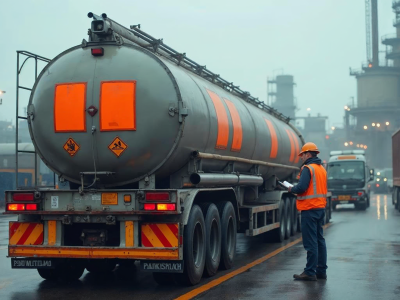
However, a Germany road toll (LKW-Maut) is charged for vehicles intended for freight transport with a technically permissible maximum laden mass over 3.5 tons. Note: the threshold was lowered from 7.5 tons to 3.5 tons starting July 1, 2024, so large freight vans are now tolled as well. Vehicles of 3.5–7.5 tons used by tradespeople to carry their own tools and materials may qualify for an exemption.
Tolls apply on all motorways (including gas stations and parking areas), on federal roads and some roads within towns, included in a road network of over 51,000 km.
You can find the map of tolled roads on the website of the Federal Office for Logistics and Mobility (BALM), here.
How to pay Germany road tolls
The road toll for trucks is paid through the Toll Collect system: either automatically, via an on-board unit (OBU), through the Toll Collect app, or by booking the route online. So you can easily pay the Germany road toll for trucks and avoid steep fines.
Paying the Germany vignette online
As a haulier (including from Romania), you can register in the Toll Collect customer portal by visiting the official website here.
You create an account in the portal, register your vehicles (with their Euro emission class and CO2 class) and can pay Germany road tolls online, including by booking the route before departure.
You can pay on the website with either a credit card or a fuel card.
You can also pay by:
- Bank transfer;
- Toll Collect direct debit;
- bank cards;
- fleet cards;
Note! Payment is made in euros!
On-board unit (OBU) or the Toll Collect app
The most convenient option for hauliers who frequently drive in Germany is the on-board unit (OBU), which automatically calculates and transmits the toll based on the distance driven, via GPS.
The OBU is installed by Toll Collect authorized service partners, after the company and vehicles have been registered in the customer portal. The toll is then invoiced by Toll Collect, and payment can be made by bank transfer, direct debit, bank card, fuel card or fleet card.
For occasional runs, you can use the Toll Collect app or book the route online on the official website, without an on-board unit. The route is booked before departure, and payment can also be made by bank card or fuel/fleet card.
You can find all the details about tolling for vehicles over 3.5 tons here.

How much does the Germany vignette cost?
The Germany road toll is calculated based on the distance driven and a per-kilometer toll rate.
This toll rate is calculated based on:
- Road infrastructure costs;
- The air pollution standard (the vehicle's Euro emission class);
- A share for noise pollution;
- CO2 emissions – since December 1, 2023, vehicles are assigned to 5 CO2 classes, with a surcharge of 200 euros per ton of CO2 emitted. Newer, more efficient vehicles pay less; all vehicles are assigned to class 1 (the most expensive) by default, and reclassification is requested in the Toll Collect portal.
How much is the Germany road toll
The Germany road toll differs by vehicle category. As mentioned earlier, goods vehicles with a technically permissible maximum laden mass over 3.5 tons pay LKW-Maut, according to the following weight categories:
- Vehicles between 3.5 – 7.5 T;
- Vehicles between 7.5 – 12 T;
- Vehicles between 12 – 18 T;
- Vehicles over 18 T, with up to 3 axles;
- Vehicles over 18 T, with 4 or more axles.
As a guide, for a Euro VI truck in CO2 class 1, the rates in effect since July 1, 2024 range from 15.1 cents/km (vehicles of 3.5–7.5 tons) to 34.8 cents/km (over 18 tons, with 5 or more axles). To see the costs for each vehicle category, go to this link.
Fines for not paying Germany road tolls
If you are a haulier and don't pay the road toll, the toll will be recovered retroactively for the distance driven, plus fines that usually reach up to 480 euros. For serious or repeated violations, the Federal Office for Logistics and Mobility (BALM) can impose fines of up to 20,000 euros.
We suggest you pay the Germany road toll and get accurate information in advance, because it is extremely important to know the traffic details of every country you transit.
Our road toll payment solutions
Because we know how important it is to set off well informed, you can find information on our website about paying road tolls and vignettes for European countries.
What's more, we guarantee the installation of road toll payment equipment for Hungary, Bulgaria or Poland, so you can work much more efficiently and practically.
And when it comes to managing your vehicle fleet, CargoTrack provides the eTMS management service to help you rise to the top of the market and streamline your administrative process.
Frequently asked questions
Is a vignette mandatory in Germany for cars?
No. German motorways remain free for cars in 2026 as well, and the plan for a car vignette (Pkw-Maut) was definitively abandoned in 2019, following the ruling of the EU Court of Justice. The only exceptions are the Warnow and Herren tunnels in the north of the country, where a passage toll is charged.
Which vehicles pay the LKW-Maut road toll in Germany?
All goods vehicles with a technically permissible maximum laden mass over 3.5 tons, the threshold having been lowered from 7.5 tons to 3.5 tons starting July 1, 2024. Vehicles of 3.5–7.5 tons used by tradespeople to carry their own tools and materials may qualify for an exemption, and fully electric and hydrogen trucks are exempt until June 30, 2031.
How much is the road toll in Germany for trucks?
The toll is calculated based on the distance driven and a per-kilometer rate that depends on infrastructure costs, Euro emission class, noise pollution and CO2 emissions. As a guide, for a Euro VI truck in CO2 class 1, the rates in effect since July 1, 2024 range from 15.1 cents/km (vehicles of 3.5–7.5 tons) to 34.8 cents/km (over 18 tons, with 5 or more axles).
How do I pay the road toll in Germany?
Payment is made through the Toll Collect system: automatically, via an on-board unit (OBU) that calculates the toll by GPS, through the Toll Collect app, or by booking the route online before departure. Hauliers, including those from Romania, create an account in the Toll Collect customer portal and can pay in euros by bank card, fuel card, fleet card, bank transfer or direct debit.
What fine do I risk if I don't pay the road toll in Germany?
The unpaid toll is recovered retroactively for the distance driven, plus fines that usually reach up to 480 euros. For serious or repeated violations, the Federal Office for Logistics and Mobility (BALM) can impose fines of up to 20,000 euros.
Which vehicles are exempt from the road toll in Germany
The toll is charged on all federal roads and motorways in Germany. However, several vehicle categories are exempt:
- buses, as well as vehicles of the armed forces, police, civil defense, fire departments, other emergency services and the federal government;
- caravans and motorhomes, provided they are not used for the commercial transport of goods;
- vehicles used exclusively for road maintenance and operation, including cleaning and snow removal;
- vehicles of non-profit or charitable organizations used to transport humanitarian aid;
- agricultural and forestry vehicles.
How can I reduce the road toll paid in Germany?
All vehicles are assigned to CO2 class 1 by default, the most expensive of the 5 emission classes, and reclassification is free in the Toll Collect portal, based on the vehicle documents. For fleets that frequently run on routes in Germany, checking the CO2 class can bring significant savings.