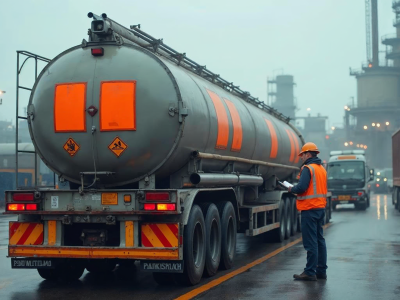


In short: fuel theft is most effectively prevented by combining a fuel level sensor installed in the tank with a GPS monitoring system. The sensor continuously measures the actual diesel level, and the GPS platform correlates every sudden drop with the vehicle’s position, time and status, generating instant alerts. At the same time, driver behavior reports reduce the extra consumption caused by aggressive driving.
In the transport industry, fuel accounts for very large sums of money. An important factor in making a company more efficient and easier to manage is putting measures in place to prevent fuel theft.
We all know there are various ways fuel gets stolen, yet in most cases this situation is hard to manage.
A GPS monitoring service can significantly reduce fuel theft and improve driver behavior behind the wheel, while maintaining good communication between dispatcher and driver.
In this article, we’ll explain the most basic measures you can apply in your company as early as tomorrow to reduce fuel theft and run your business much more efficiently.
Read on to learn the most important information from the transport industry!

Fuel theft – a major problem
Fuel theft is a very common problem for hauliers. This habit among drivers leads to a major increase in fuel spending and can make the business much harder to manage.
In addition, aggressive driving can be another factor that leads to much higher fuel consumption and, again, to much higher costs than necessary.
This situation is often hard for hauliers to manage, and rightly so – tight control over drivers is not always easy to achieve.
However, a GPS monitoring solution and its additional features can be a huge advantage for transport companies in this “fight” against fuel theft.
GPS monitoring – an effective solution
The right GPS monitoring service for your business will help you significantly reduce fuel theft.
There are many options on the market when it comes to GPS monitoring, but it’s important to choose GPS equipment with the features and accessories that match your business needs and requirements.
If you make the right choices, you’ll be able to get the most out of a GPS monitoring service, reduce your vehicles’ fuel consumption and eliminate fuel theft.
We suggest 2 of the most effective ways to bring fuel theft down to almost 0: using a fuel level sensor and monitoring driver behavior.
Using a fuel level sensor
A fuel level sensor is a small device installed inside the fuel tank that continuously provides information about the fuel level.
It is designed specifically for fuel management and works by communicating with the GPS monitoring equipment.
The sensor is fitted with electronic galvanic isolation via an interface and power circuits. To measure the fuel level, it uses a measuring head together with a probe immersed in the fuel, which acts as a capacitor. The capacitance of this capacitor varies in direct proportion to the fuel level in the tank.
By installing fuel level sensor, you’ll have information about the fuel level in the tank and access to:
- Fuel tank report;
- Fuel control module;
- Fuel Level Reports;
- Fuel alerts (you’ll be alerted every time the tank level drops sharply);

The advantages of this GPS equipment accessory are very important for managing your business:
- The sensor offers extremely high accuracy, linearity and stability regardless of temperature.
- A calibration table is stored inside the sensor head, allowing data to be transferred directly in liters.
- The built-in galvanic isolation protects the sensor head against power surges.
- The sensor has a monolithic design, which adds to its durability.
- It offers a wide range of probe lengths, from 15 to 300 cm.
- It stands out for its ease of installation, enabling quick and efficient deployment.
Click here to read more about the fuel level sensor.
Driver behavior analysis
A very important feature for reducing fuel consumption is driver behavior analysis.
Once you’ve eliminated fuel theft, it’s important to also make sure your vehicle is driven efficiently.
The driver’s driving style is an important factor in reducing fuel consumption. Hard braking, aggressive acceleration and an overall aggressive or erratic driving style lead to high fuel consumption and much greater vehicle wear.
With a high-performance GPS monitoring system you can check detailed driver behavior reports (with complete information on speed, braking, acceleration and other key parameters).

Integrating GPS monitoring into your business with CargoTrack
It’s important to choose a GPS monitoring service that fits your business needs so you can make the most of the best features.
At CargoTrack we work closely with every partner to make the best choices for their GPS monitoring service.
In addition, we install the GPS equipment you choose free of charge anywhere in Europe, right at your vehicle’s location.
Want to learn more about these services?
Want to reduce fuel theft in your company?
Contact us now and we’ll help you step by step!
Frequently asked questions about fuel theft and GPS monitoring
How can I tell if fuel is being stolen from my truck?
The clearest sign is a sudden drop in the tank level recorded while the vehicle is parked or not at a fuel station. A GPS system with a fuel level sensor shows exactly the time, place and amount lost. A second red flag is a recurring difference between the amount on the fuel receipt and the actual increase in the tank level.
What is a fuel level sensor and how does it work?
A fuel level sensor is a sensor installed inside the tank that continuously measures the fuel level. It works on a capacitive principle: the immersed rod forms an electrical assembly whose capacitance changes with the amount of diesel around it. The GPS equipment reads this value and converts it into liters using a calibration table stored in the sensor head, so the dispatcher sees the available liters directly.
What reports and alerts do I get if I install a fuel level sensor?
You get the fuel tank report, level reports over time intervals, the fuel control module and automatic alerts every time the level drops sharply. In practice, you can see actual refuelings, consumption per trip and any siphoning, and the alert reaches the dispatcher quickly, so the situation can be checked before the vehicle reaches its destination.
Can a fuel level sensor be installed on any type of vehicle?
It can be installed on most vehicles and machinery with an accessible tank: trucks, buses, construction equipment, generators or tankers. Sensors come in various lengths, from 15 to 300 cm, to match the depth of the tank. Installation involves fitting the sensor at the top of the tank and an initial calibration, so the values transmitted in liters are accurate.
Is it legal to monitor company vehicles and drivers via GPS?
Yes, GPS monitoring of company vehicles is permitted when it serves a legitimate purpose, such as protecting assets, managing the fleet and controlling consumption. However, the employer must inform drivers in advance, clearly and verifiably, about the system, the data collected and its purpose, and must comply with personal data protection legislation. Monitoring must be limited to work activity, not private life.
How much does a GPS monitoring system with a fuel sensor cost?
The cost depends on the number of vehicles, the type of GPS equipment chosen, the number of tanks fitted with a sensor and any additional accessories, so it is set through a custom quote. At CargoTrack, GPS equipment installation is free, anywhere in Europe, right at the vehicle’s location, which eliminates travel costs and truck downtime.
How does monitoring driver behavior help reduce fuel consumption?
Hard braking, aggressive acceleration, high speeds and prolonged idling significantly increase consumption and vehicle wear. A high-performance GPS system generates reports on these parameters for each driver and trip, so the dispatcher can identify costly habits. Based on these reports, you can run targeted training or introduce performance criteria, and the fleet’s average consumption gradually goes down.
Which company installs fuel level sensors on trucks?
CargoTrack installs fuel level sensors with its own teams, who travel to the vehicle’s location within 48 hours at most. Installation is free, and the contract has no minimum term.
How much does a fuel consumption monitoring system cost?
The cost has two components: the equipment, purchased once, and the monthly subscription per vehicle. The amount depends on the number of vehicles and the measurement method chosen — fuel level sensor or CAN interface reading. Request a quote for your fleet configuration.