

TollRo applies from October 1, 2026, and everyone working in transport already knows about it.
For the full picture – who pays, rates, payment methods, and what happens to the rovinieta – see the complete TollRo 2026 guide.
Mind the criterion: both the weight AND the purpose of the vehicle matter. Under Article 4(1) of Law no. 226/2023, the rovinieta applies to vehicles built to carry passengers — regardless of weight — and to freight vehicles up to 3.5 tons. A coach or bus over 3.5 tons stays on the rovinieta and keeps its validity until it expires. Only freight vehicles over 3.5 tons move to TollRo, plus mixed-transport vehicles, which are treated as freight vehicles.
This is the new road toll for trucks, replacing the classic rovinieta (Romanian road vignette), which was standard until recently.
Who does TollRo apply to?
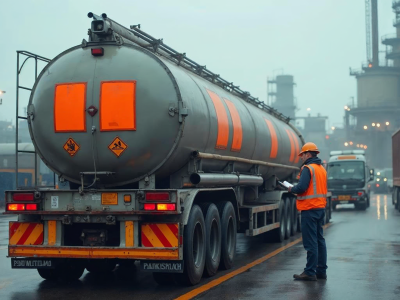
From October 1, 2026, the new road toll applies to freight vehicles over 3.5 tons. All commercial freight vehicles over 3.5 tons are affected by the new regulation.
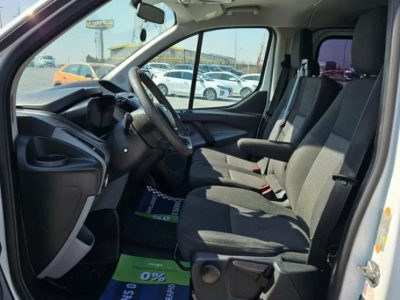
For passenger cars, minibuses and coaches (regardless of weight), as well as freight vehicles up to 3.5 tons, the rovinieta remains valid.
TollRo for Freight Vehicles over 3.5 Tons
Since October 1, 2026, every freight vehicle over 3.5 tons pays the road toll based on distance driven, MTMA, Euro class and road type.
This includes trucks, tractor units (tractor heads with semi-trailers), vans and light commercial freight vehicles over 3.5 tons, as well as mixed-use vehicles. Minibuses, buses and coaches do not pay TollRo, regardless of weight: they pay the rovinieta (Romanian road vignette).
In practice, the new toll targets all road freight operators using Romania’s national road network, whether we’re talking about large companies with fleets of dozens of trucks or independent hauliers with a single vehicle over 3.5 tons.
Unlike the rovinieta, which was paid once for a given period, TollRo is calculated based on how much and where each vehicle actually drives. This means a haulier who runs daily on national roads will feel the change much more strongly than one who only goes out on the road occasionally.
Since October 1, 2026, the new road toll for trucks has been paid with a route ticket or a charging session in the TollRo app (per kilometer, based on the phone’s GPS), and starting January 15, 2027, also through an option hauliers often prefer: automatic road toll payment devices.

Who TollRo applies to
Road toll in Romania for hauliers
The new road toll can be paid by several methods:
- The TollRo App – the official app of CNAIR (Romanian road infrastructure company), available since October 1, 2026. With it, you can pay the road toll in two ways: either you buy a route ticket before the trip (the ticket can also be bought on etoll.ro, at CNAIR points of sale or at border crossing points), or you use the charging session, per kilometer, based on the mobile phone’s GPS. For the session, you top up the e-wallet in advance, and the driver starts the session before departure and closes it at the end; while the session is active, the app records the route and the toll is deducted from the e-wallet.
*Important: if you use the charging session, make sure the app has permission to access the phone’s location. Without this permission, the route cannot be recorded and the app will not work properly. - A contract with a service provider – ideal for hauliers who frequently run domestic routes and regularly use Romanian roads. Under this contract, you enter into an agreement with an authorized provider, which automatically handles road toll payments on the haulier's behalf through an on-board unit. This option is available only starting January 15, 2027.
Whichever method you choose, make sure each vehicle has a valid route ticket or an active session in the app before departure.
Hauliers who frequently drive on Romanian roads will benefit most, starting January 15, 2027, from a contract with an authorized provider and automatic payment via an on-board unit. Until then, and for occasional trips, the solution is the route ticket or the charging session in CNAIR’s TollRo app.
Want to pay TollRo automatically?
Automatic payment with an on-board unit will be possible from January 15, 2027, through CNAIR-authorized providers. The CargoTrack solution is in the works and is not yet available. Join the waiting list and we’ll let you know when it launches.
If you’re not sure which option suits your fleet or want to find out when on-board unit payment will be available (from January 15, 2027), Contact us.
Now that you know who TollRo applies to and which vehicle categories are covered by this toll system, you can better understand who is required to pay and how the rules for using Romania’s roads are set.

Frequently asked questions about who TollRo applies to
What is TollRo?
TollRo is the system through which Romania introduced distance-based road tolling for freight vehicles over 3.5 tons, replacing the rovinieta for this transport category.
When does the TollRo toll take effect?
The TollRo toll has applied since October 1, 2026, at 00:00.
Who does the TollRo toll apply to?
The obligation to pay falls on all operators or owners of freight vehicles with an MTMA (maximum authorized weight) over 3.5 tons that use national roads, expressways or highways in Romania.
Which vehicle categories fall within the scope of TollRo?
The toll applies to:
- Category I — freight vehicles with an MTMA above 3.5 tons and up to 7.5 tons
- Category II — freight vehicles with an MTMA above 7.5 tons and under 12 tons
- Category III — freight vehicles with an MTMA of 12 tons or more (including tractor units with semi-trailers)
- Mixed-use vehicles (passengers and freight), treated as freight vehicles
Minibuses, buses and coaches do not pay TollRo, regardless of weight: they pay the rovinieta.
Do passenger car drivers also have to pay TollRo?
No, TollRo does not apply to passenger cars. They remain in the rovinieta system and are not affected by the new toll.
How is the TollRo toll amount determined?
The toll amount is determined based on distance driven, MTMA, Euro class and road type (highway/expressway or national road).
What is the TollRo rate per kilometer?
For combustion-engine vehicles, the rate ranges from 0.08 to 0.62 lei/km (VAT included), depending on weight category, Euro emission class and road type. Since October 8, 2026 (OMTI 959/2026), electric trucks have separate rates of 0.02–0.12 lei/km. Rates for combustion-engine vehicles:
- 3.5–7.5 tons: 0.08–0.11 lei/km on national roads (DN) / 0.17–0.22 lei/km on motorways and expressways
- 7.5–12 tons: 0.14–0.19 lei/km on national roads (DN) / 0.29–0.37 lei/km on motorways
- Over 12 tons: 0.24–0.31 lei/km on national roads (DN) / 0.48–0.62 lei/km on motorways
Electric trucks pay the least, followed by Euro VI; Euro III–0 pay the most.
How does TollRo differ from the rovinieta?
The rovinieta is a fixed fee for a period of time (1 day, 10 days, 30 days, 60 days or 12 months) that does not take distance driven into account, and it applies to cars, minibuses, coaches and freight vehicles of up to 3.5 tons. TollRo, by contrast, charges for every kilometer actually driven, taking into account MTMA, Euro class and road type, and applies exclusively to freight vehicles over 3.5 tons.
What payment options are available for the TollRo toll?
Until January 15, 2027, there are two payment methods; from January 15, 2027, payment via on-board unit is added:
- Route ticket — bought before the trip in the TollRo app, on etoll.ro, at CNAIR points of sale or at border crossings
- Charging session in the TollRo app — per kilometer, using the phone's GPS; the driver starts it before departure and closes it at the end, and the toll is deducted from the e-wallet
- From January 15, 2027: a contract with a CNAIR-authorized provider — automatic payment via on-board unit, recommended for hauliers with frequent trips
Can TollRo be paid with a route ticket?
Yes, the route ticket is a legally valid payment method, recommended for hauliers who make occasional trips or transit Romania sporadically. The ticket is bought from the TollRo app, on etoll.ro, at CNAIR points of sale or at border crossing points and is valid for 72 hours from the declared start time, for a single pass on the chosen route.
Is there a device that automates TollRo payment?
Not yet. Starting January 15, 2027, with an on-board unit (OBU) from a CNAIR-authorized provider, the TollRo toll will be calculated and paid automatically based on distance driven; the user is still required to declare the vehicle data correctly and to update the weight (MTMA) in the unit, for example when coupling a trailer. Until then, the driver buys a route ticket or starts and closes the charging session in the TollRo app.
What penalties apply for not paying TollRo?
Anyone driving without paying owes the toll: TollRo for the kilometers traveled, if the distance can be determined, or 2,000 lei, once per 12-hour period, if it cannot. If the amount owed is paid on time, no penalties apply; the deadline is 72 hours from receipt of the notification letter. Otherwise, the fine is 10 to 20 times the TollRo owed or, if the distance cannot be determined, 5,000 lei (Law no. 226/2023, Art. 19). Fines have applied since October 1, 2026. A bill that would suspend fines until March 31, 2027 was submitted to the Senate but was not adopted. Exception: you are not penalized if you could not pay because of a platform failure and you tried before departure.
Does TollRo also apply on ordinary national roads?
Yes, the TollRo system covers national roads, expressways and highways in the network managed by CNAIR, except for national road sections within city limits.
Are expressways included in the TollRo network?
Yes, expressways are part of the road network covered by TollRo, along with national roads and highways.
What does the term MTMA mean in the TollRo system?
MTMA (maximum authorized weight) is the maximum legally permitted weight of a fully loaded vehicle, including the vehicle’s own weight, the cargo, the fuel and the passengers. This value, listed in the registration certificate, determines the TollRo rate category applicable to the vehicle.
How does the Euro emission standard factor into the TollRo calculation?
The rate has four emission tiers: electric vehicles (lowest), Euro VI, Euro V–IV and Euro III–0 (highest). For example, for category III on highways: 0.12 / 0.48 / 0.55 / 0.62 lei/km.
Is the rovinieta still mandatory for trucks after TollRo is introduced?
No, the rovinieta for freight vehicles over 3.5 tons has been fully replaced by TollRo. Starting October 1, 2026, trucks no longer buy a rovinieta.
Are there systems similar to TollRo in other European countries?
Yes, Hungary’s HU-GO works on the same principle — per-kilometer tolling, differentiated by vehicle category and Euro standard, with payment by route ticket or OBU device. The difference is that HU-GO has been operating in Hungary for several years, while TollRo was launched in Romania on October 1, 2026.
Which institution is responsible for the TollRo system?
CNAIR — the Romanian National Company for Road Infrastructure Administration — is the institution designated by Law no. 226/2023 to issue, administer and collect the TollRo toll.
Does TollRo permanently eliminate the rovinieta for heavy transport?
Yes, with TollRo coming into force on October 1, 2026, the rovinieta was eliminated as an obligation for freight vehicles over 3.5 tons, and the per-kilometer toll system became the only road toll applicable to this category.