

If you run a fleet of freight vehicles over 3.5 tons, you have a concrete decision to make: how you will pay TollRo. In short: since October 1, 2026, 00:00, TollRo has been paid in the CNAIR (Romanian road infrastructure company) system in two ways: with a route ticket, bought before departure from the TollRo app, on etoll.ro, at CNAIR points of sale or at border crossing points, or with a charging session in the TollRo app (per kilometer, based on the phone’s GPS), which the driver starts before departure and closes at the end. Starting January 15, 2027, the TollRo on-board unit (OBU) will also be available, through CNAIR-authorized providers – the solution for those who drive frequently on Romanian roads.
Watch out for the different dates. The TollRo system was supposed to be implemented by August 31, 2026 (Law no. 170/2026, art. 12), but the rates actually apply from October 1, 2026, for both TollRo and the rovinieta, the Romanian road vignette (Law no. 226/2023, art. 29). Payment with an on-board unit, through authorized providers, will only be available starting January 15, 2027. Also on January 15, 2027, interoperability with the systems of other EU countries becomes operational, through SETRE.
This article doesn’t repeat what TollRo is or how it is calculated — for that, see complete TollRo 2026 guide and the explanation of what is TollRo. Here you compare the payment methods side by side and prepare your fleet step by step.
What you need to decide now and by January 15, 2027
TollRo applies from October 1, 2026, 00:00. The deadline was postponed twice: it was originally January 1, 2026, then July 1, 2026, and Parliament pushed the start date back another three months to complete the technical and operational testing of the IT platform.
An important detail for your budget: for freight vehicles over 3.5 tons, the rovinieta ceases to be valid on October 1, 2026, even if it still has months remaining. CNAIR refunds the value of the unused period, but only at the haulier’s request (art. 24 para. (4) of Law no. 226/2023); the rovinieta (Romanian road vignette) is not automatically converted into TollRo credit. The implementing rules published on September 30, 2026 (MTI Order no. 922/2026, Official Gazette no. 832) set the calculation formula: S = T × Zn / Zt, i.e., the rate paid, including VAT, multiplied by the days remaining from October 1, 2026 until expiry and divided by the total number of days of validity. According to CNAIR (press release of October 6, 2026), the application can be submitted exclusively through the refund app that CNAIR will make available by December 29, 2026; the launch date will be announced on the CNAIR website. The application is submitted to CNAIR, not to the distributor you bought the rovinieta from, and unused tolls for the Fetești – Cernavodă bridge are refunded the same way. The money is refunded within 90 days of the application being registered in the app, and transfer costs and the distributor’s or payment processor’s fee are deducted from the amount. The steps are explained in the article on what happens to an unused rovinieta.
The decision has two stages. The first is already underway: from October 1, you pay with a route ticket or a per-kilometer session, so you need an account in the CNAIR system, with your vehicles added, and a clear rule on who pays: the dispatcher, from the office, or each driver, from the app. For payment with an on-board unit you have more time, but the contract with an authorized provider, installing the equipment on dozens of vehicles and testing take weeks, not hours. It pays to settle your choice early, so the equipment is up and running from January 15, 2027.
TollRo payment methods
1. The route ticket (from the TollRo app)
The route ticket is bought and paid before entering toll roads, for a declared route, from the the TollRo app, on etoll.ro, at CNAIR points of sale or at border crossing points. It is not sold at gas stations. You see the cost before paying. The ticket is valid for a single trip, strictly in the calculated direction, and for a maximum of 72 hours from the declared start of the journey; for the return trip you buy another ticket. It works well when you know the route in advance, and it does not depend on phone signal on the road.
The dispatcher’s role. The manager or dispatcher can buy the route ticket from the office for each truck individually, in the TollRo app or on etoll.ro. In this case, drivers don’t need the app on their phones.
The advantage is simplicity: no contract, no equipment, no subscription. The downside is that every trip means a manual operation, and if the route changes along the way, the declared ticket no longer matches reality: the vehicle must stick to the declared route and time window, and for a detour you must buy another ticket for the new section before entering it: the ticket does not cover sections other than those on the declared route (etoll.ro Terms and Conditions). The ticket cannot be bought after you have driven the road. The more trips you make, the higher the risk of missing one.
2. The charging session in the TollRo app (per kilometer, based on the phone’s GPS)
App TollRo, provided by CNAIR, also allows per-kilometer payment through the charging session: you top up the e-wallet in advance with credit (minimum 20 lei), start the session before the trip, the app records the route driven based on the phone’s GPS, and the toll is deducted per kilometer, in real time, from the e-wallet; at the end, you close the session. The session works only from the app, not from the portal. The app is available on Google Play and in the App Store.
Important: if you use the charging session, make sure the app has permission to access the phone’s location and that the phone stays with the driver, with signal and internet, for the entire trip. According to the etoll.ro Terms and Conditions, if the phone stops transmitting its position for a longer period, the session stops automatically, and the toll remains due for the distance actually driven; continuing the trip without a route ticket or an active session is at your own risk. If the session stops because of a TollRo platform malfunction, you are not penalized (art. 9 para. (4) of the implementing rules). At the end of the trip, the driver closes the session: outside an active session the app does not collect location data, but a session left running keeps recording movements. On routes with coverage gaps, the safe option is the route ticket.
For a haulier with 1–5 vehicles and predictable trips, the in-app charging session covers the need without additional equipment. The limitation appears at scale: each driver needs their own user in the TollRo app, because one account cannot run two sessions at once, but the company can share the balance: the account holder invites the drivers, their sessions draw from the holder’s balance, and invoices are issued to the company (etoll.ro Terms and Conditions). Each vehicle depends on the driver’s phone, with the app and location active, and fleet-wide records are kept manually, from accounts and statements.
3. Contract with an authorized provider and on-board unit (from January 15, 2027)
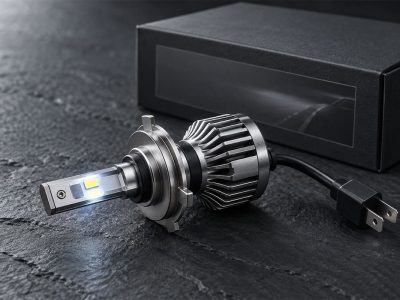
A contract with a service provider is signed with a CNAIR-authorized provider, which automatically manages road toll payments on your behalf. The vehicle is fitted with the on-board unit (OBU) supplied by the authorized provider, which reports the distance driven on the tolled network. This option will only be available starting January 15, 2027. Until then, no device installed on a truck pays TollRo, including the CargoTrack GPS device you already have.
Here the “don’t forget” part disappears completely. The toll is calculated and paid based on the kilometers actually driven, with no phone and no driver involvement, and you get centralized records for the whole fleet. The cost is set by contract, and installing the equipment requires an initial intervention on each vehicle. Details about the automatic road toll payment device can be found on the dedicated page. The CargoTrack automatic device payment solution is in development, is not yet available, and we cannot announce a launch date yet.
Want to pay TollRo automatically?
Automatic payment with an on-board unit will be possible from January 15, 2027, through CNAIR-authorized providers. The CargoTrack solution is in the works and is not yet available. Join the waiting list and we’ll let you know when it launches.
Comparison table: route ticket vs. in-app charging session vs. on-board unit
| Criterion | Route ticket (TollRo app) | Charging session in the TollRo app (per km) | Contract with provider + device (OBU) |
| Available from | October 1, 2026 | October 1, 2026 | January 15, 2027 |
| Best suited for | Routes known in advance, occasional trips, fleets where the dispatcher buys tickets from the office | Small fleets, 1–5 vehicles, predictable trips | Fleets that drive daily or weekly on Romanian roads |
| Payment method | Bought before the trip, for the declared route, from the TollRo app, on etoll.ro, at CNAIR points of sale or at border crossing points; valid for a maximum of 72 hours, in one direction only | Per kilometer, from the e-wallet topped up in advance, based on the phone’s GPS; the session is started before the trip and closed at the end | Automatically, through a CNAIR-authorized provider, based on kilometers driven |
| Equipment required | None on the vehicle; if the dispatcher buys the ticket, the driver doesn’t need the app | Each driver’s phone, with the TollRo app, their own user (the balance can be shared by the company), signal, internet and location access | On-board unit (OBU) from a CNAIR-authorized provider |
| Administrative effort | High at large volumes — one operation per trip, which the dispatcher can handle from the office | Medium — each driver has their own user; the company can share a common balance, which has to be topped up; fleet-wide records are kept separately | Low — centralized records, no per-trip intervention |
| Risk of omission / fine | High: changed route or forgotten ticket | Medium: depends on the driver’s phone (app, location, signal, battery) | Low: reporting is automatic |
| Upfront cost | Zero | Zero | Equipment + contract with the provider |
| Cost control | Per-trip visibility, hard to aggregate | Visibility in the app, manual reporting | Reporting by fleet, by vehicle and by period |
| Main advantage | Maximum simplicity, no commitments | No equipment and no route declaration | Eliminates human error and centralizes records |
| Main disadvantage | Doesn’t scale; sensitive to route changes | Still dependent on the phone and the human factor | Available only from January 15, 2027; requires a contract and installation on each vehicle |

How to choose, based on your fleet profile
The rule of thumb depends on how often you drive on Romania’s toll network, not on the size of the fleet itself.
- You enter Romania a few times a year — the route ticket is enough. A contract makes no sense for a few transits.
- You have a few vehicles and occasional but regular trips — the charging session in the TollRo app covers the need without equipment, provided you have a clear procedure: each driver has their own user, someone is in charge of topping up the balance (which can be a common balance shared by the company) and someone checks the drivers’ phones.
- You have routes set in advance and want drivers not to depend on their phones — the dispatcher buys the route ticket for each truck from the office, from the TollRo app or on etoll.ro. Drivers don’t need the app.
- You drive constantly on Romanian national roads and highways — a contract with an authorized provider and an on-board unit is the option that doesn’t eat up your administrative time and doesn’t depend on the driver’s phone or memory. Until January 15, 2027, use route tickets bought by the dispatcher or the per-kilometer session in the app.
- You have a mixed fleet — you can combine: the TollRo device (from January 15, 2027) on vehicles that run domestically every day, and the route ticket for those that rarely enter the country.
Before deciding, estimate what it actually costs you. For combustion-engine vehicles, the official unit rates, published in Official Gazette no. 940 of October 10, 2025, range between 0.08 and 0.62 lei/km (VAT included), depending on MTMA, road type and Euro class. Since October 8, 2026 (OMTI 959/2026), electric trucks have separate rates of 0.02–0.12 lei/km. For figures for your category, see how much TollRo costs per kilometer, and for an estimate on your actual routes, use TollRo calculator.
How much a mistake costs
Law no. 226/2023 (art. 19) distinguishes between the toll due and the fine. If the distance driven without payment can be determined, you owe the TollRo calculated for those kilometers. If it cannot be determined, for example, when you drive without a route ticket and without an active session, the TollRo due is 2,000 lei, charged only once within a 12-hour period. This is the toll due, not the fine.
If you pay the amount due on time, no penalties apply. The deadline is 72 hours from receipt of the information letter (Law no. 226/2023, art. 19); at a roadside check, the amount is paid on the spot. If you do not pay on time, the fine is 10 to 20 times the TollRo amount due, when the distance can be determined, or 5,000 lei, when it cannot.
Fines apply from October 1, 2026. A bill that would suspend fines until March 31, 2027 was submitted to the Senate but has not been adopted. You are not penalized if you could not pay because of a TollRo platform malfunction (art. 9 para. (4) of the implementing rules), provided that before departure you tried to create an account, enroll the vehicle and pay: attempts are logged by the system (CNAIR press release of October 6, 2026). Pay TollRo and keep proof of payment.
This is exactly why the risk of omission matters more than the cost difference between methods. For a fleet with many trips, a single fine can exceed a year’s savings from avoiding a contract. The logic is similar to that of the rovinieta fine in 2026: the penalty is designed to cost more than the toll.
Checklist for paying TollRo now and for switching to an on-board unit from January 15, 2027
Go through the steps in order. Each one depends on the previous one.
- Take inventory of your fleet. For each vehicle, note the registration number, the MTMA from the registration certificate and the Euro emission class. These are the data that determine the rate — without them you can’t estimate anything.
- Separate the vehicles that fall under TollRo. Only freight vehicles with an MTMA over 3.5 tons. The rest stay on the rovinieta.
- Estimate annual mileage on the toll network, separately for highways/expressways and national roads. The rate differs significantly between the two categories.
- Calculate the estimated cost per vehicle and per fleet, using the official rates and TollRo calculator. Compare the result with what you paid for the rovinieta until September 30, 2026.
- Set up your TollRo account. Create an account on etoll.ro or in the TollRo app, downloaded from Google Play or from the App Store, and add your vehicles. If you used the app during the pilot period, log in with the same email address and check whether the vehicles appear in the account. If the dispatcher buys route tickets from the office, a single company account is enough, and drivers don’t need the app. If you use the charging session, each driver needs their own user in the app, and the company can share the balance with the drivers; on each phone, check that the app has location access. From October 1, 2026 until January 15, 2027, the route ticket and the charging session are the only payment methods. Do not pay by bank transfer into CNAIR accounts: it is not a valid payment (CNAIR press release of October 6, 2026).
- Choose the long-term payment method for each group of vehicles, based on the table above. You don’t have to use the same method for the whole fleet.
- If you choose an on-board unit, contact the provider early. Check the equipment delivery time, the contract terms and the reporting method, so the equipment is up and running from January 15, 2027. Installation on a large fleet doesn’t happen in a day.
- Install and test the equipment before giving up the app, on real trips, to catch any signal or configuration issues.
- Train your drivers. They need to know which method their vehicle uses, what to check before departure (app running, location on, account balance or ticket purchased), that they must close the session right after the trip, and whom to notify if an error occurs. For tickets, make it clear who pays: the driver or the dispatcher.
- Request a refund for the remaining rovinietas. For freight vehicles over 3.5 tons, the rovinieta ceases to be valid on October 1, 2026. For each vehicle, note the registration number, the rovinieta serial number, the purchase date, the expiry date and the amount paid, plus the company details and IBAN account, and submit the refund request with CNAIR, exclusively through the refund app that CNAIR will make available by December 29, 2026 (the launch date will be announced on the CNAIR website). The money is refunded within 90 days of the application being registered in the app.
- Update your internal procedures and budget. The cost becomes variable, tied to kilometers, rather than fixed per period. Transport contracts and per-trip pricing must reflect this.
What to do in the next few days
TollRo has applied since October 1, 2026, so the priority is day-to-day payment: decide whether the dispatcher buys route tickets from the office or the drivers use the charging session, each with their own user and a topped-up balance (it can be the company’s common balance), and train them. You can do the fleet inventory and cost estimate right away, without depending on anyone, and they answer the main question: whether an on-board unit contract is worth it for your fleet, starting January 15, 2027. For the specific payment procedure, see the details in the article on how to pay TollRo.
The CargoTrack solution for the TollRo automatic payment device is in development and not yet available. If you’d like to be notified when it launches, Contact us with your company name and number of vehicles, and we’ll add you to the waiting list.
Frequently asked questions – TollRo on-board unit vs. route ticket
Which should I choose: the route ticket or the TollRo automatic payment device?
It depends on how often you drive on Romanian roads. For a few transits a year, the route ticket from the TollRo app is enough. For daily or weekly trips, route tickets bought by the dispatcher from the office or the per-kilometer session in the app reduce the effort, and starting January 15, 2027, a contract with an authorized provider and an on-board unit eliminates the administrative effort and the risk of forgetting to pay.
When can I pay TollRo with an on-board unit?
Starting January 15, 2027, through a contract with a CNAIR-authorized provider. Until then, TollRo is paid only in the CNAIR system: with a route ticket or a charging session in the TollRo app (per kilometer, based on the phone’s GPS). A GPS fleet tracking device does not pay TollRo. The CargoTrack on-board unit payment solution is in the works and is not yet available.
Where can I buy the TollRo route ticket?
From CNAIR’s TollRo app, available on Google Play and the App Store, on etoll.ro, at CNAIR points of sale and at border crossing points. The route ticket is not sold at gas stations. The dispatcher can buy it from the office for each truck, in which case drivers don’t need the app.
Can the dispatcher buy the route tickets for each truck?
Yes. The manager or dispatcher can buy the route ticket for each truck individually from the office, from the TollRo app or on etoll.ro. In this case, drivers don’t need the app on their phones.
Does every driver need the TollRo app?
Only if you pay per kilometer, through the charging session. In that case, each driver needs their own user in the app, with position sharing turned on for the entire trip; the company can share the balance with the drivers, and invoices are issued to the company. If you work with route tickets bought by the dispatcher, it is not necessary.
When does TollRo take effect?
TollRo applies from October 1, 2026, 00:00. The deadline was postponed twice — from January 1, 2026 to July 1, 2026, then to October 1, 2026 — to complete testing of the IT platform, and Law no. 170/2026 brought forward the system implementation deadline to August 31, 2026, without changing the date the rates apply.
What happens to the rovinieta I’ve already bought?
For freight vehicles over 3.5 tons, the rovinieta ceases to be valid on October 1, 2026. The value of the unused period is refunded by CNAIR, but only at the haulier’s request, under art. 24 para. (4) of Law no. 226/2023. According to CNAIR (press release of October 6, 2026), the application can be submitted exclusively through the refund app that CNAIR will make available by December 29, 2026. The amount is calculated under the implementing rules of September 30, 2026, in proportion to the days remaining from October 1, 2026 until expiry, minus transfer costs and fees, and is refunded within 90 days of the application being registered in the app.
How much does TollRo cost per kilometer?
For combustion-engine vehicles, the official unit rates range from 0.08 to 0.62 lei/km, VAT included, depending on MTMA, road type (highway/expressway or national road) and Euro class. Since October 8, 2026 (OMTI 959/2026), electric trucks have separate rates of 0.02–0.12 lei/km. Electric trucks pay the least, followed by Euro VI; Euro III–0 pay the most.
What fine do I risk if I don’t pay TollRo?
Law no. 226/2023 distinguishes between the toll due and the fine. If the distance cannot be determined, the TollRo due is 2,000 lei, once within a 12-hour period. If you pay the amount due on time, no penalties apply: the deadline is 72 hours from receipt of the notice letter (Law no. 226/2023, art. 19). Otherwise, the fine is 10 to 20 times the TollRo due, or 5,000 lei when the distance cannot be determined. Fines apply from October 1, 2026. A bill that would suspend fines until March 31, 2027 was submitted to the Senate but has not been adopted. Exception: you are not penalized if you could not pay because of a platform malfunction and you tried before departure.
Can I use different methods for different vehicles in the same fleet?
Yes. You can use the route ticket for vehicles that rarely enter Romania’s tolled network and the in-app charging session for the rest, and starting January 15, 2027, you can fit on-board units to the vehicles that run domestically on a regular basis.
What data do I need to estimate the TollRo cost?
You need the MTMA and Euro emission class for each vehicle, both from the registration certificate, plus the estimated annual mileage, separately on highways/expressways and on national roads.
When should I start preparing for TollRo?
Now. TollRo applies from October 1, 2026, so you already need an account in the CNAIR system and a payment method set for each vehicle. If you want an on-board unit, allow at least 6–8 weeks for contracting, installation and testing, so the equipment is up and running from January 15, 2027.