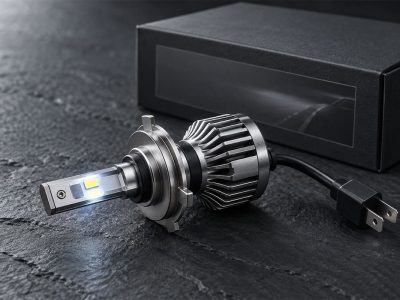


A Europe-wide road toll device (OBU – On-Board Unit) is a unit mounted on the truck’s windshield that communicates automatically with national toll systems and pays road tolls with no stops and no tickets bought manually for each country.
For a haulier running international trips, the difference is huge: instead of juggling separate accounts across seven or eight national systems, you have one device, one account, and one invoice.
The problem this type of European road toll device solves is anything but theoretical. Every European country has built its own road toll system, with its own registration rules, its own on-board units, and its own fines. A truck leaving Romania for the Netherlands routinely crosses four or five completely different toll regimes.
What a European road toll device is and how it works
In technical terms, the on-board toll device is known as an OBU, short for On-Board Unit. In practice, it is a small box fixed to the windshield that always knows where the vehicle is and what type of road it is traveling on.
It relies on two main technologies, often used together:
- GNSS (satellite) – the device determines the vehicle’s position via satellite and calculates the kilometers driven on toll roads. This is the technology used in Hungary, the Czech Republic, Slovakia, Germany, Poland, and Bulgaria.
- DSRC (microwave) – the device communicates by short-range radio with toll gantries or toll booths. This is the technology used at toll barriers in France, Italy, and Spain, and on bridges and tunnels.
In addition to its position, the device also transmits the vehicle data that affects the rate: number of axles, gross weight, Euro emission class and, in some systems, whether a semi-trailer is attached. That is why this information must be set correctly before departure – a wrong axle count means a wrong toll and, if you are inspected, a fine.
How it differs from a vignette and a route ticket
A vignette (the rovinieta, in Romania) is paid for a fixed period, regardless of how many kilometers you drive. A route ticket is bought before each trip, for an exactly declared route. An on-board unit, on the other hand, automatically charges for the kilometers actually driven, without you having to request or declare anything in advance.
The difference becomes decisive in heavy traffic: a route ticket assumes you know the route in advance and follow it to the letter. Any detour, traffic restriction, or change of destination means an invalid ticket and a risk of penalties.
Which toll system each European country uses
The table below summarizes the situation for heavy commercial vehicles in the main European markets. You can also find country-by-country details in our guide to road tolls for trucks in Europe.
| Country | Toll system | OBU / on-board unit required? |
|---|---|---|
| Romania | TollRo (from October 1, 2026) | No – route ticket (etoll.ro, TollRo app, points of sale of CNAIR, the Romanian road infrastructure company) or charging session in the TollRo app; on-board unit via a CNAIR-authorized provider only from January 15, 2027 |
| Hungary | HU-GO | Optional – route ticket or OBU |
| Bulgaria | BGTOLL | Optional – prepaid route or OBU |
| Czech Republic | MYTO CZ | Yes – on-board unit mandatory above 3.5 t |
| Slovakia | eMYTO SK | Yes – on-board unit mandatory |
| Poland | e-TOLL | Yes – geolocation device or dedicated app |
| Germany | Toll Collect | Recommended – the alternative is manually booking each trip |
| Austria | GO-Maut (GO-Box) | Yes – GO-Box or equivalent |
| Belgium | Viapass | Yes – OBU mandatory |
| Netherlands | Vrachtwagenheffing (from July 1, 2026) | Yes – OBU for heavy vehicles |
| Switzerland | LSVA (heavy vehicle fee) | Yes – electronic reporting; alternatively, manual declaration before each entry |
| Slovenia | DarsGo | Yes – on-board unit mandatory |
| Denmark | Distance-based toll (from January 1, 2025) | Yes – approved OBU or digital ticket per trip |
| France, Italy, Spain | Barrier tolls on motorways | Not mandatory – but the device gives you access to the fast lanes |
| Portugal | Electronic tolling on motorways | Practically necessary on barrier-free motorways |
| Greece | Barrier tolls, with national transponders | No – payment is made at the barrier |
Romania – TollRo
TollRo has applied since October 1, 2026 and replaced the rovinieta (Romanian road vignette) for vehicles designed for the carriage of goods with an MTMA (maximum authorized weight) above 3.5 tons and for mixed-use vehicles treated as such. The toll is calculated based on distance traveled, MTMA, Euro emission class and road type (highway/expressway or national road).
Until January 15, 2027, TollRo can be paid in two ways: with a route ticket, bought before the trip in the TollRo app, on etoll.ro, at CNAIR points of sale or at border crossings, or with a charging session in the TollRo app, which the driver starts before departure and closes at the end; the route is recorded based on the phone’s GPS, and the toll is deducted from the electronic wallet. Starting January 15, 2027, payment via on-board unit is added, through CNAIR-authorized providers. Full details, including per-kilometer rates, are in our guide to the TollRo toll, and the device option is described on the dedicated page for the TollRo automatic payment device.
Hungary – HU-GO
HU-GO is Hungary’s distance-based toll system, in operation for more than a decade, for vehicles over 3.5 tons. You can pay with a route ticket bought before the trip or with an on-board unit that reports the vehicle’s position automatically.
For hauliers who frequently cross Hungary, the device option eliminates the most common cause of fines: deviating from the route declared on the ticket. We explained how it works in our article on HU-GO in Hungary.
Czech Republic – MYTO CZ
The Czech Republic has one of the strictest regimes in the region. The MYTO CZ system requires a mandatory on-board unit for all vehicles over 3.5 tons traveling on motorways and first-class roads included in the toll network. There is no route ticket option for trucks.
The system is operated by CzechToll, runs on satellite technology, and allows both advance payment (prepay) and later settlement (postpay). The rates include a CO₂ emissions component.
The Netherlands – Vrachtwagenheffing
As of July 1, 2026, the Netherlands switched from the Eurovignette to Vrachtwagenheffing, a distance-based toll system for trucks. Payment is made via an on-board unit, and the toll applies on motorways and in the Kiltunnel and Westerscheldetunnel tunnels.
This is a major change for Romanian hauliers running the western corridor, because a vignette valid for a fixed period no longer covers the Netherlands. All the details are on the page about road tolls in the Netherlands. For the broader context of the Eurovignette, which remains in force in other signatory countries, see our article on the Eurovignette.
Bulgaria – BGTOLL and Poland – e-TOLL
Bulgaria charges vehicles over 3.5 tons through the BGTOLL system, based on kilometers driven, with the option of a prepaid route or an on-board unit. We explained the registration steps in our article on the BGTOLL system in Bulgaria.
Poland uses e-TOLL, a geolocation-based system that requires either a dedicated device or an app that continuously transmits the vehicle’s position. Details in our article on e-TOLL in Poland.
Switzerland – LSVA
Switzerland applies the LSVA, the heavy vehicle fee, to all freight vehicles over 3.5 tons on the entire road network – not just on motorways. As of 2026, the system has moved to a new, fully digital generation, and electronic reporting has become mandatory, including for foreign-registered vehicles.
Foreign hauliers have two options: a contract with a toll service provider approved by the Swiss customs authority, or manually declaring each entry into the country before crossing the border.
Greece
Greece works differently from the countries of central Europe: it has no distance-based tolling, but rather traditional toll barriers on motorways, with rates by vehicle category based on height and number of axles. National transponders such as e-PASS exist, but they are not yet interoperable with devices issued in other European countries.
In practice, paying at the barrier remains the usual option in Greece for foreign hauliers.
What EETS is – the European Electronic Toll Service
EETS (European Electronic Toll Service) is the European framework that allows a single on-board unit, issued by a single provider, to pay road tolls in multiple member states. The basic idea is simple: instead of having a separate contract and a separate box for each country, you have one contract and one device.
How it works in practice:
- You sign a contract with an EETS service provider, which supplies the device.
- The provider handles the relationship with each national toll operator and settles your tolls.
- You receive a single invoice, with tolls itemized by country, vehicle, and route.
The accounting advantage is at least as important as the operational one: a single invoice means a single reconciliation, instead of an archive of statements from eight national portals.
Important to keep in mind: EETS does not automatically cover all of Europe. Each provider has its own list of activated toll domains, and some countries – Greece is the classic example – are not yet integrated. That is why the right question is not “Is the device EETS?” but “Which countries does this device actually cover?”
How to choose the right European road toll device for your fleet
The choice isn’t about price, but about how well the device fits your actual routes. Here are the criteria that matter:
- Coverage of the countries on your routes – check the exact list of countries, not a generic promise of “European coverage.” If you run trips to the Czech Republic or Belgium, where an OBU is mandatory, coverage of those countries is not optional.
- Settlement method – prepay (you top up a balance) or postpay (you pay by invoice). Prepay gives you better control over cash flow, but requires you to monitor the balance.
- Balance alerts – a truck stopped in Germany with a zero balance causes more damage than any fee. SMS or e-mail alerts before the balance runs out are essential.
- Reporting by vehicle and cost center – if you re-invoice tolls to your customers, you need itemized reports, not a lump sum.
- Installation and activation – who installs the device and how quickly it becomes operational.
- Updates – a device that updates remotely (OTA) picks up new toll domains without taking the truck off the road.
One last criterion, often overlooked: what happens when the vehicle settings change. If you swap semi-trailers or drive empty versus loaded, the device must let you quickly change the number of axles and the weight, right from the cab.
CarGObox – one device for road tolls across Europe
CarGObox is the on-board unit offered by CargoTrack for automatic payment of road tolls in 15 European countries, with a single device and a single account.
According to the official page carGObox, the device covers road tolls in: Austria, Belgium, Bulgaria, the Czech Republic, Switzerland, France, Germany, Italy, the Netherlands, Poland, Portugal, Slovakia, Slovenia, Spain, and Hungary, plus bridges and tunnels in Denmark and Sweden – the Warnow Crossing and the Herren Tunnel (Germany), the Liefkenshoek Tunnel (Belgium), the Storebælt Bridge (Denmark), and the Øresund Bridge (Sweden).
The Netherlands was added in July 2026, with the switch to Vrachtwagenheffing. Regarding expanded coverage, the same page announces: Denmark from 08.2026 and Croatia from 2027.
How CarGObox works
The device is installed in the vehicle by the CargoTrack team and placed on the windshield for optimal signal reception. From there, it communicates automatically with the toll systems in each country and processes payments as you pass toll points, without stopping.
It runs on hybrid radio technology – GNSS, DSRC, and Bluetooth – for freight vehicles over 3.5 tons, and activation takes no more than 48 hours.
What it displays and what you can change
The screen of this European road toll device shows, in real time, the booked toll service, number of axles, license plate number, emission class, weight, battery level, and signal strength. A system of LEDs (green, yellow, red, or off) indicates the operating status.
The driver can change the following right from the cab: language, number of axles, semi-trailer, current weight, and cost center. Service updates are delivered via OTA (Over-The-Air) technology, with no physical intervention on the device.
Keep in mind: this European road toll device becomes inactive after 30 minutes without movement and needs a GPS signal to work properly. The device is provided free of charge, with small fees applied only to the amount topped up. You can find more about how it works in the article CarGObox pays road tolls automatically.
As more and more countries move from vignettes to distance-based tolling – Romania from October 1, 2026, the Netherlands from July 1, 2026, Denmark from 2025 – managing tolls manually is becoming increasingly costly in both time and risk. A single on-board European road toll device is not a luxury; it is simply how international transport works today.
If you want to find out what coverage is available for your specific routes and how installation works, Contact us and we’ll give you specific answers for your fleet.
Frequently asked questions – European road toll device
What is a European road toll device?
It is an on-board unit (OBU – On-Board Unit) mounted on the vehicle’s windshield that communicates automatically with national toll systems and pays road tolls based on the kilometers driven and the vehicle’s characteristics.
What does OBU mean?
OBU stands for On-Board Unit. It is the technical term used in all European toll systems for the device mounted in the vehicle.
What is EETS?
EETS (European Electronic Toll Service) is the European framework that allows a single on-board unit, obtained from a single provider, to pay road tolls in multiple countries. Actual coverage, however, varies from one provider to another, and some countries are not yet integrated.
Which countries does CarGObox work in?
According to the official CarGObox page, the device covers 15 European countries: Austria, Belgium, Bulgaria, the Czech Republic, Switzerland, France, Germany, Italy, the Netherlands, Poland, Portugal, Slovakia, Slovenia, Spain, and Hungary, plus bridges and tunnels in Denmark and Sweden. The Netherlands joined the coverage in July 2026, and the expansion continues with Denmark (08.2026) and Croatia (2027).
Do I need a toll device in the Czech Republic?
Yes. The MYTO CZ system requires a mandatory on-board unit for vehicles over 3.5 tons traveling on the toll network in the Czech Republic. There is no route ticket option for trucks.
How are road tolls paid in the Netherlands?
As of July 1, 2026, the Netherlands switched from the Eurovignette to Vrachtwagenheffing, a distance-based toll system for trucks. Payment is made via an on-board unit, and the toll applies on motorways and in the Kiltunnel and Westerscheldetunnel tunnels.
Is there a road toll device for Greece?
Greece uses traditional toll barriers on motorways, with national transponders such as e-PASS that are not yet interoperable with devices issued in other European countries. For foreign hauliers, paying at the barrier remains the usual option, and Greece is not on the list of countries covered by CarGObox.
Can a single device also pay TollRo in Romania?
Not yet. TollRo has applied since October 1, 2026 and, until January 15, 2027, is paid with a route ticket (in the TollRo app, on etoll.ro, at CNAIR points or at the border) or with a charging session in the TollRo app (per kilometer, based on the phone’s GPS). Starting January 15, 2027, the toll can be recorded and paid automatically through an on-board unit from a CNAIR-authorized provider. CargoTrack is preparing a solution for paying TollRo by device, which can only be used from January 15, 2027, after authorization by CNAIR; the solution is not yet available, but you can join the waiting list. For Hungary (HU-GO), Bulgaria (BGToll) and Poland (e-Toll) we already offer devices, and CarGObox is the separate solution for broader European coverage.