

Netherlands Road Toll 2026 – If you drive your truck into the Netherlands and are looking for where to buy the vignette, there's an important piece of news to take in: as of July 1, 2026, you no longer buy a vignette for the Netherlands — you need a contract with a toll service provider and an OBU (toll device) installed in the vehicle. The Netherlands has dropped the Eurovignette and switched to Vrachtwagenheffing, a toll calculated per kilometer actually driven.
In practice, there is no longer any counter, gas station or website where you can get a “7-day vignette” for the Netherlands. Without a working OBU on board, the truck is non-compliant from day one. Below you'll find who pays, on which roads, how much it costs per kilometer, how to register step by step and what device you need.
What Vrachtwagenheffing is and why there is no longer a vignette in the Netherlands
Vrachtwagenheffing is the Dutch road toll for goods vehicles, calculated per kilometer driven on tolled roads.
It came into force on July 1, 2026 and has permanently replaced the Eurovignette in the Netherlands.
The confusion is understandable: for years, Romanian hauliers searched for a “Netherlands vignette” because that is exactly what they bought — a pass for days, weeks, months or a year, valid regardless of how many kilometers you drove. You can see how the old system worked in our article about the Netherlands vignette. Now the logic has been completely reversed: you pay in proportion to the distance and to how polluting the truck is.
Note: the Eurovignette has not disappeared from Europe — it has only disappeared in the Netherlands. It remains mandatory in other states that are party to the agreement, including Luxembourg and Sweden. If you had an annual Eurovignette that extended beyond June 30, 2026, the unused portion is not refunded automatically: you must file a refund request.
Vignette vs. per-kilometer toll: what has actually changed
| Item | Eurovignette (until June 30, 2026) | Vrachtwagenheffing (from July 1, 2026) |
| Calculation method | Fixed rate per period (day, week, month, year) | Rate for each kilometer driven on tolled roads |
| How to buy | Online or at points of sale, before the run | Not bought: contract with a service provider |
| Equipment in the vehicle | Not required | OBU (toll device) mandatory on board |
| Rate criteria | Euro emission class and number of axles | Technically permissible maximum laden mass, Euro emission class and CO₂ emission class |
| Cost of a short run | Same as a long run, within the same period | Proportional to the kilometers actually driven |
| Enforcement | Checked at roadside inspections | Fixed cameras above the road and mobile equipment |
Who pays the Netherlands road toll
The toll applies to goods vehicles in categories N2 and N3, i.e., those with a technically permissible maximum laden mass over 3,500 kg. It does not matter whether the vehicle is registered in the Netherlands or in another state — Romanian hauliers fall under exactly the same rules as Dutch ones.
A few important points about the Netherlands road toll:
- The toll is due whether the vehicle is driving loaded or empty and regardless of the type of goods.
- Cars and light vehicles under 3.5 tons are not covered by Vrachtwagenheffing.
- Coaches and buses are not part of categories N2 and N3, so they are not subject to this toll.
- The truck must have an OBU on board even when it drives exclusively on untolled roads in the Netherlands.
Are there exemptions from the Netherlands road toll?
Yes, but they are limited and generally irrelevant for commercial transport: historic vehicles over 40 years old used for private purposes, fire, police and military vehicles, one-day or dealer plates, motorhomes and sanitation vehicles with foreign plates, trucks with foreign transit plates. For some categories, the exemption must be requested in advance; it does not apply automatically.
On which roads is the Netherlands road toll charged
The toll applies on almost all motorways in the Netherlands, plus on a number of provincial and municipal roads. The reason for including some secondary roads is simple: it prevents hauliers from bypassing tolled motorways and shifting heavy traffic to local routes unsuited to trucks.
The full list of roads and the official map are published in PDF format on the vrachtwagenheffing.nl portal and may be updated periodically. They are worth checking before you plan your routes, especially if you make repeat deliveries in the same area.
How much it costs: per-kilometer rates in the Netherlands
What the rate is made up of
The per-kilometer rate has three components:
- The infrastructure charge – the cost of building and maintaining roads.
- External costs – air pollution and noise produced by the vehicle.
- The CO₂ component – based on the vehicle's carbon dioxide emission class.
The final rate depends on three data points taken from the truck's documents: technically permissible maximum laden mass, Euro emission class (from 0 to 6) and CO₂ emission class (from 1 to 5, where 1 means the highest emissions and 5 means zero emissions). The weight classes used are: 3,500–12,000 kg, 12,000–18,000 kg, 18,000–32,000 kg and over 32,000 kg.
Rate range and concrete examples of Netherlands road tolls
Rates start at about 2.5 euro cents/km for zero-emission vehicles and go up to 48.7 euro cents/km for the heaviest Euro 0 trucks. A modern Euro 6 truck falls, in most cases, somewhere around 16–20 euro cents/km.
| Vehicle | Indicative rate per kilometer (2026 level) |
| 16 t truck, Euro 6, diesel | ≈ 16.0 euro cents/km |
| 25 t truck, Euro 6, CO₂ class 1 | 18.2 euro cents/km |
| Truck over 32 t, Euro 6, diesel | ≈ 20.1 euro cents/km |
| Heavy truck, Euro 0 | 48.7 euro cents/km (maximum rate) |
| 100% electric truck (zero emissions) | ≈ 2.5–3.8 euro cents/km |
| System-wide average rate | ≈ 19.1 euro cents/km |
Temporary reduction: from September 1 to December 31, 2026, a reduction of 22,3% applies to the rates. In concrete terms, the 25 t truck in the example above pays about 14.1 euro cents/km during this period instead of 18.2. From 2027, rates return to normal and will be slightly higher, due to inflation indexation.
The good news is that the introduction of the per-kilometer toll was accompanied by a reduction of the Dutch vehicle tax (motorrijtuigenbelasting) to the European minimum, also applicable from July 1, 2026 — though relevant only for vehicles registered in the Netherlands.
How to register, step by step
The procedure is identical for Dutch and foreign hauliers. Here are the steps:
- Choose a service provider. You have two options: NedLinq, the provider that covers the Netherlands only, or an EETS provider, which lets you pay tolls in several European countries with a single device and a single invoice. For international transport, the EETS option is almost always more practical.
- Prepare the vehicle data. You need the technically permissible maximum laden mass, the CO₂ emission class and the Euro emission class. The official portal provides a search tool by license plate number, so you can check what data is registered for your truck.
- Sign the contract. You contact the chosen provider and sign the toll service contract, which also includes supply of the device.
- Receive and install the OBU. You have two installation options: fixed installation in the dashboard, which is safer and more stable, or the “plug and play” version, which is simpler but more prone to accidental disconnection.
- Switch the device on right away. The OBU must be active whenever the truck is driving in the Netherlands, including on untolled roads.
- Receive the invoices. The device records via GPS the kilometers driven on tolled roads, the provider calculates the amount, issues your invoice and transfers the revenue to the Dutch state.
- Deregister the vehicle when you sell it. When you sell the truck, you notify the provider and remove the device.
Practical recommendation: don't leave registration until the last minute. Delivering and installing the device takes time, and a planned run can't be postponed because the OBU hasn't arrived yet.
What OBU you need for the Netherlands
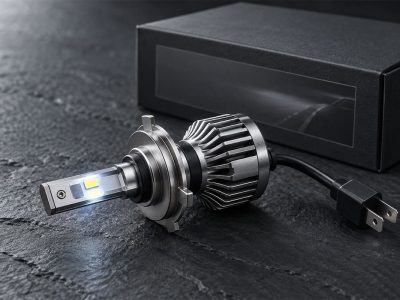
You need a toll device supplied by an authorized provider that operates in the Netherlands. You cannot use an OBU taken from another truck, and you cannot improvise with a phone app — the Dutch system requires a dedicated device linked to your specific vehicle.
If you only run in the Netherlands occasionally, a device for the Dutch market alone may be enough. But if you run international routes, an EETS device radically simplifies administration: a single device, a single contract and a single invoice for several countries, instead of a separate device for each national system. We have detailed the differences between the national systems in our guide on road tolls for trucks in Europe.
CargoTrack offers the on-board unit carGObox, an automatic toll payment solution that is installed in the truck and records the kilometers driven, without the driver having to do anything each time they enter a country. You can find details on coverage for the Netherlands and the contract terms on the dedicated page Road tolls in the Netherlands, and the device specifications on the page carGObox. If you want to know exactly which countries are covered in your configuration, it is best to ask for specific confirmation before signing.
Checks and fines: what happens if you drive without an OBU
Enforcement is automatic, through fixed cameras mounted above the road and mobile equipment, which can be moved from one location to another. You don't need to be stopped in traffic to be penalized.
| Violation | Fine (until January 1, 2027) | Fine (after) |
| No contract with a toll provider | 400 € | 800 € |
| Toll device switched off | 250 € | 500 € |
| Toll device not working | 250 € | 500 € |
| Device belonging to another truck | 250 € | 500 € |
Within a 24-hour period, you can receive a maximum of one fine; if several violations are found at the same time, only the highest applies. Unpaid fines do not go away: the license plate number enters a monitoring system, and the cameras flag the vehicle to inspectors, who can stop it until the amount is paid.
What happens to the money collected
A significant part of the revenue goes back to the transport sector, in the form of subsidies for renewing fleets and making them more efficient: AanZET (zero-emission trucks), SPRILA (charging infrastructure at company premises), SWiM (hydrogen), SiLK (collaboration in the logistics chain) and CO₂ emission measurement programs. For 2026, a budget of over 253 million euros is available, allocated in funding windows that may run out before the deadline.
The switch from a vignette to a per-kilometer toll changes how the cost of a run in the Netherlands is built: for hauliers with modern vehicles and optimized routes, the bill may be lower than before, while old fleets and inefficient routes become noticeably more expensive. The key is to have the correct data registered and a device that works flawlessly.
If you want to find out which automatic toll payment solution suits your fleet and how installation works, Contact us and we'll give you a specific answer, based on the routes you run.
Frequently Asked Questions About the Netherlands Road Toll
Is there still a vignette in the Netherlands in 2026?
No. As of July 1, 2026, the Netherlands has dropped the Eurovignette and introduced Vrachtwagenheffing, a per-kilometer toll. You can no longer buy a truck vignette for the Netherlands: you need a contract with a toll service provider and an OBU installed in the vehicle.
What is Vrachtwagenheffing?
Vrachtwagenheffing is the Dutch road toll for goods vehicles over 3.5 tons, calculated for each kilometer driven on tolled roads. The rate depends on the vehicle's technically permissible maximum laden mass, its Euro emission class and its CO₂ emission class.
Which vehicles pay the Netherlands road toll?
The toll applies to goods vehicles in categories N2 and N3, i.e., those with a technically permissible maximum laden mass over 3,500 kg, regardless of the country of registration and whether they are driving loaded or empty. Cars and vehicles under 3.5 tons do not pay this toll.
How much is the road toll in the Netherlands per kilometer?
Rates start at about 2.5 euro cents/km for zero-emission vehicles and go up to 48.7 euro cents/km for the heaviest Euro 0 trucks. A Euro 6 truck falls roughly between 16 and 20 euro cents/km, and the system-wide average rate is about 19.1 euro cents/km. From September 1 to December 31, 2026, a temporary reduction of 22.3% applies.
On which roads is the toll charged in the Netherlands?
The toll applies on almost all motorways in the Netherlands, plus on a number of provincial and municipal roads. The map and full list of tolled roads are published on the official portal vrachtwagenheffing.nl and may be updated periodically.
What OBU do I need for the Netherlands?
You need a toll device supplied by an authorized provider operating in the Netherlands: either NedLinq, valid for the Netherlands only, or an EETS provider, which covers several countries with a single device and a single invoice. The device must be linked to your specific vehicle and must be switched on whenever the truck is driving in the Netherlands.
What fine do I get if I drive without an OBU in the Netherlands?
Not having a contract with a toll provider is fined €800, reduced to €400 until January 1, 2027. A device that is switched off, not working or belonging to another truck is fined €500, reduced to €250 over the same period. Within a 24-hour period, a maximum of one fine applies, the highest of the violations found.
How is road toll payment checked in the Netherlands?
Checks are automatic, through fixed cameras mounted above the road and mobile enforcement equipment. Unpaid fines remain linked to the license plate number, and the cameras flag the vehicle to inspectors, who can stop it until the amount is paid.