

Setting up a freight transport company may seem complicated at first glance, but the procedure is well structured and can be completed step by step. The difference from an ordinary company is that, in addition to registering with the Trade Register, you also need a specific authorization for access to the occupation of road transport operator.
In short: you set up an SRL (limited liability company) with the ONRC (Romanian Trade Register) under CAEN code 4941, meet the conditions for access to the occupation (establishment, good repute, financial standing, transport manager), obtain the Community license and a certified true copy for each vehicle from the ARR (Romanian Road Authority), then put the vehicle into service with a tachograph and the related cards.
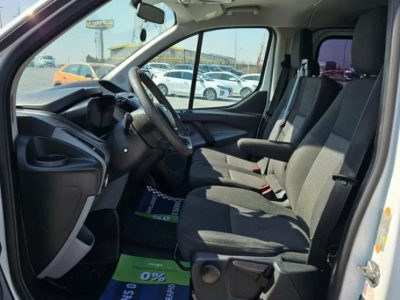
The good news for those starting out with 3.5-ton vehicles: the financial requirements are considerably lower than for heavy trucks, and the initial investment is affordable. The less good news is that, since May 2022, the 2.5–3.5-ton segment is no longer “free” — it also requires a license and a transport manager.
Steps to Set Up a Freight Transport Company
Here is the complete path, in the order you need to follow it:
- Set up the SRL with the ONRC – name reservation, articles of association, registered office, share capital.
- Choose the right CAEN code – 4941 for road freight transport.
- Meet the conditions for access to the occupation – real establishment, good repute, financial standing, transport manager.
- Obtain the transport license and the certified true copy from the Romanian Road Authority.
- Check whether your drivers need a certificate of professional competence (depends on tonnage).
- Prepare the vehicle – tachograph, tachograph card, mandatory equipment.
- Take on your ongoing obligations – e-Transport, driving and rest times, road tolls.
Step 1: Setting Up the SRL with the Trade Register
The most suitable legal form for freight transport is the SRL. A PFA (sole trader) cannot obtain a license for road transport for hire or reward, so this option is not a real choice if you want to carry other people's goods for money.
Documents required to set up the company
- Name reservation – you submit 2–3 name options; the reservation is valid for a limited period, during which the complete application must be filed.
- Articles of association – includes the partners, directors, business purpose, share capital and management structure.
- Registered office documents – a loan-for-use or lease agreement, plus the property deed for the premises.
- The registration application and the tax registration annex.
- The beneficial owner statement and the sworn statement on operating conditions.
- Copies of the identity documents of the partners and directors.
The rules changed recently. Under Law no. 239/2025, which took effect on December 18, 2025, newly established limited liability companies must have a minimum share capital of 500 lei. In addition, SRLs that exceed a net turnover of 400,000 lei are required to increase their share capital to at least 5,000 lei.
For a transport company, this second provision matters: a turnover of 400,000 lei is reached relatively quickly even with two or three vehicles, so it is worth factoring it in from the start.
Tax registration with ANAF (Romanian tax authority)
Together with the ONRC application, you also file the tax registration annex, in which you choose the tax regime (micro-enterprise or corporate income tax) and whether you register for VAT purposes. If you plan to do international transport or intra-Community acquisitions (for example, buying a vehicle from the EU), you will also need to register in the Register of Intra-Community Operators. Discuss these options with an accountant before filing — changing the regime later involves additional formalities.
Step 2: The CAEN Code for Freight Transport
The CAEN code for road freight transport is 4941.
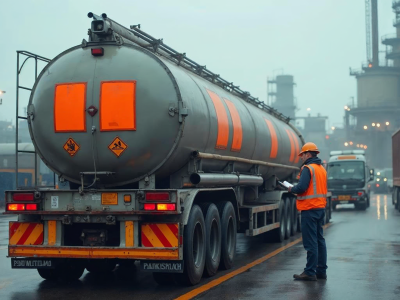
According to According to the ONRC classification, CAEN code 4941 covers freight transport for hire or reward or on own account: log transport, refrigerated transport, heavy haulage, bulk goods transport (including in tankers), vehicle transport, waste and residue transport, as well as truck rental with driver.
Depending on your plans, you can also add useful secondary CAEN codes: 5229 (transport intermediation activities — useful if you also want to operate as a freight forwarder), 5210 (warehousing) or 4942 (moving services).
Note: the CAEN code does not give you the right to transport. It only declares the activity. The actual right comes from the license issued by the ARR.
Step 3: Conditions for Access to the Occupation
Regulation (EC) No. 1071/2009 sets out four conditions that every road transport operator must meet at all times:
- Real and stable establishment – premises in Romania where the company's documents are kept and where vehicles can be inspected.
- Good repute – the transport manager and the company must not have serious convictions or serious infringements of road transport legislation.
- Financial standing – capital and reserves above a minimum threshold, calculated per vehicle.
- Professional competence – a transport manager holding a certificate of professional competence (CPC) who has a genuine link with the company: employee, director, partner or owner.
Financial standing thresholds
This is the requirement that most often catches new entrepreneurs by surprise. The thresholds differ significantly depending on vehicle tonnage:
| Vehicle category | First vehicle | Each additional vehicle |
| Vehicles with an MTMA over 3.5 tons | 9,000 EUR | 5,000 EUR |
| Vehicles with an MTMA between 2.5 and 3.5 tons | 1,800 EUR | 900 EUR |
Financial standing is proven through certified annual financial statements or, if the company is newly established and does not yet have a balance sheet, through a bank guarantee letter or professional liability insurance. For a start with a single 3.5-ton vehicle, the 1,800 EUR threshold makes entering the market much more affordable than in the heavy truck segment.
The transport manager
You have two options: either obtain the certificate of professional competence yourself (after a course and an exam), or hire or contract someone who holds one. A contracted transport manager can manage a maximum of four different companies, with a combined fleet of no more than 50 vehicles.
In the long run, having a partner become the transport manager is cheaper and gives you full control over the company.
Step 4: The Transport License and the Certified True Copy
The Community license is issued by the Romanian Road Authority (ARR) and is the document that certifies the company's right to carry out road transport for hire or reward. For each vehicle in the fleet you need a certified true copy, which is kept on board the vehicle.
Important to keep in mind: as of May 21, 2022, the licensing requirement also applies to vehicles with an MTMA between 2.5 and 3.5 tons used in transport for hire or reward. The period when you could operate small vans without a license is over.
We have detailed the full procedure, application file and deadlines in our dedicated guides: freight transport license – who needs it, documents and costs and, for the light segment, how to get a transport license for 3.5 tons.
Step 5: The Driver's Certificate of Professional Competence (CPC)
There is a distinction here that saves time and money if you know it from the start:
- For vehicles of over 3.5 tons, drivers need a certificate of professional competence (CPC), obtained through initial qualification and maintained through periodic training.
- For vehicles with an MTMA between 2.5 and 3.5 tons, the ARR states that drivers do not need an initial or periodic certificate of professional competence.
You can find details on what the certificate involves in the light segment in our article on the certificate of professional competence for 3.5-ton freight transport.
Step 6: The Vehicle, the Tachograph and the Tachograph Card
The vehicle must be owned, leased or rented, with documents proving the right of use. For the certified true copy, the ARR checks for a valid periodic technical inspection and the correct classification of the vehicle.
A tachograph is mandatory for vehicles over 3.5 tons. What you need to know if you are starting out with light vans: since July 1, 2026, vehicles with an MTMA between 2.5 and 3.5 tons that carry out international transport or cabotage in the EU must be fitted with a smart tachograph 2 (G2V2), under Regulation (EU) No. 165/2014, as amended by the Mobility Package. For trips exclusively within Romania, the requirement does not apply.
Along with the tachograph, each driver needs a driver card, and the company needs a company card for downloading the data. The procedure and costs are explained in the guide on the tachograph card: documents, cost and how to get one.
Step 7: Ongoing Obligations after Setup
Once you have the license and your first vehicle on the road, the day-to-day obligations begin:
- The e-Transport system – declaring shipments of high fiscal risk goods and obtaining the UIT code. Details in the guide on mandatory e-Transport.
- Driving and rest times – following the rules and archiving tachograph data. See the guide on driving and rest times.
- Road tolls – the rovinieta (Romanian road vignette), and for heavy vehicles the new per-kilometer toll system.
- Annual renewal of certified true copies and maintaining financial standing.
- Finding loads – at first, most companies work through freight exchanges, until they build up direct customers.
Cost control is also part of your ongoing obligations. A GPS fleet tracking system helps you prove the routes driven in case of an inspection, track actual fuel consumption, check idle times and automatically download tachograph data. For a new company, where every trip counts, the difference between profit and loss often lies in unbilled kilometers and empty running hours.
Estimated Setup Costs
The ARR fees below are those applicable from December 30, 2025, according to the official ARR fee list.
| Item | Approximate cost | Notes |
| Minimum SRL share capital | 500 lei | 5,000 lei if you exceed 400,000 lei in net turnover |
| ONRC fees (registration, name reservation) | variable | Check current fees on onrc.ro; filing online is cheaper |
| Community license for freight transport | 1,000 lei | Valid for 10 years |
| Certified true copy of the Community license | 360 lei | Per vehicle, valid for 1 year |
| Transport manager certificate of professional competence | 200 lei | ARR fee for issuing the certificate |
| Driver certificate of professional competence (card) | 250 lei | Valid for 5 years; not required for 2.5–3.5 t |
| Financial standing – first vehicle | 1,800 EUR / 9,000 EUR | 2.5–3.5 t / over 3.5 t |
On top of these come costs that vary widely from case to case: the transport manager course, the vehicle (purchase or lease), RCA (motor third-party liability) and CMR insurance, monthly accounting and, where applicable, tachograph installation.
Common Mistakes at the Start
- Assuming no license is needed under 3.5 tons. This is the most expensive mistake. Since May 21, 2022, transport for hire or reward with vehicles over 2.5 tons requires a Community license and a certified true copy.
- Buying the vehicle before checking the requirements. A 3.49-ton vehicle and a 3.6-ton vehicle put you in completely different regimes: financial standing, driver certificate, tachograph, road tolls.
- Overlooking financial standing as an ongoing obligation. It is not a condition you meet just once when filing the application — the ARR can check it later, and failing to meet it can lead to suspension of the license.
- Forgetting to renew certified true copies. The license is valid for 10 years, but the certified true copy only for 1 year. A vehicle operating with an expired certified true copy risks penalties.
- A transport manager “on paper” only. The link with the company must be genuine and verifiable, and the number of companies a contracted person can manage is limited.
- Setting rates without the real cost per kilometer. Many new hauliers accept trips at prices below the real cost because they have no data on fuel consumption, waiting times and empty kilometers.
- Putting off tax decisions. The VAT and tax regimes are set at incorporation and directly affect your margin, especially in international transport.
How Long Does the Whole Process Take?
Registering the SRL with the ONRC usually takes a few business days from filing a complete application. The most time-consuming part is obtaining the transport manager certificate of professional competence, if you don't already have one — the course and exam span several weeks and have scheduled sessions.
That is why the practical recommendation is to start the transport manager course in parallel with the Trade Register formalities, not afterward. That way, by the time the company is registered, you already have the slowest piece of the puzzle in place.
Setting up a freight transport company is, in the end, a series of clear steps: SRL, CAEN code, access to the occupation, license, vehicle, ongoing obligations. Each step has its own documents and deadlines, but none is unpredictable if you prepare in advance.
If you need help with fleet tracking and cost control from your very first month of operation, Contact us and we'll explain which solution fits the size of your company.
Frequently asked questions
What CAEN code do I need for a freight transport company?
CAEN code 4941 – Road freight transport. It covers freight transport for hire or reward and on own account, including refrigerated transport, bulk transport and truck rental with driver. You can add secondary codes such as 5229 (transport intermediation) or 5210 (warehousing).
What documents do I need to set up a freight transport company?
For the SRL: name reservation, articles of association, registered office documents, registration application, tax registration annex, beneficial owner statement and the partners' identity documents. Later, for the license, you need proof of financial standing, the transport manager's certificate, criminal record certificates and the vehicle documents.
Do I need a license for freight transport with 3.5-ton vehicles?
Yes. Since May 21, 2022, companies that carry out freight transport for hire or reward with vehicles with an MTMA between 2.5 and 3.5 tons must obtain a Community license and a certified true copy for each vehicle.
What financial standing do I need to prove?
For vehicles over 3.5 tons: 9,000 EUR for the first vehicle and 5,000 EUR for each additional vehicle. For vehicles between 2.5 and 3.5 tons: 1,800 EUR for the first vehicle and 900 EUR for each additional vehicle. It is proven through certified financial statements, a bank guarantee letter or professional liability insurance.
How much does a freight transport license cost?
According to the ARR fees in force since December 30, 2025, the Community license for freight transport costs 1,000 lei and is valid for 10 years, while the certified true copy costs 360 lei per year for each vehicle.
Can I set up a transport company as a PFA?
Not for road freight transport for hire or reward. The Community license is granted to transport operators set up as companies, the usual form being the SRL.
Do I need a transport manager if I only work with 3.5-ton vehicles?
Yes. The professional competence requirement also applies in the 2.5–3.5-ton segment. The manager must hold a valid certificate of professional competence and have a genuine link with the company – employee, director, partner or owner.
Do 3.5-ton drivers need a certificate of professional competence?
According to the ARR, drivers of vehicles with an MTMA between 2.5 and 3.5 tons do not need an initial or periodic certificate of professional competence. For vehicles over 3.5 tons, the certificate is mandatory.
What minimum share capital do I need?
Under Law no. 239/2025, newly established SRLs have a minimum share capital of 500 lei. If net turnover exceeds 400,000 lei, the share capital must be increased to at least 5,000 lei.