
In short: the rovinieta (Romanian road vignette) is mandatory on highways, expressways, and all national roads (European, main, and secondary). You don’t need a rovinieta on county roads, local roads, or on national road sections located within cities.
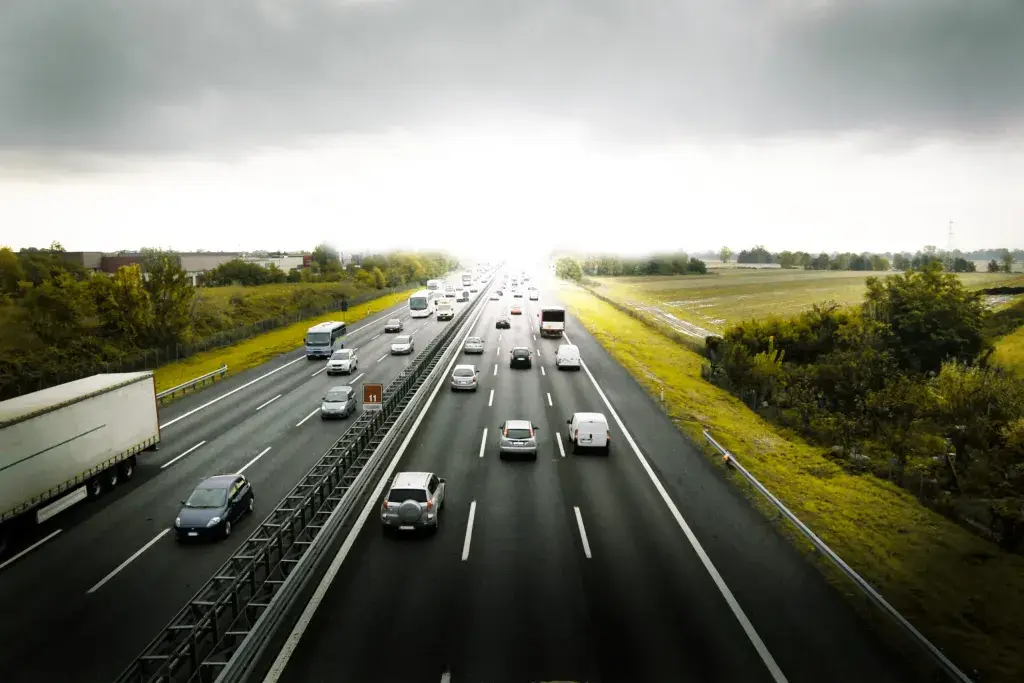
Read on to find out which roads require the rovinieta.
Owning a motor vehicle comes with the benefits of getting from one place to another and of moving goods and passengers quickly and efficiently, but also with a whole series of extra expenses on top of those inherent to maintaining and operating vehicles of any category.
So, in addition to the taxes and fees vehicle owners must pay each year to the local authorities where the vehicle is registered, there are, especially for freight or passenger transport, a number of licenses that must be obtained, for a fee, from ARR (Romanian Road Authority), as well as mandatory motor third-party liability insurance (RCA). This set of mandatory payments for driving on public roads also includes the so-called road toll or, as it is universally known, the rovinieta.
În acest articol vei afla pe ce drumuri trebuie rovinieta, câteva detalii utile despre ea și despre modul de obținere a a acesteia în momentul în care este necesară.
What the Rovinieta Is – The Rationale for a Mandatory Fee for Everyone Driving on Public Roads
The idea of charging for the use of public roads is nothing new in taxation. Various state-organized societies, at different stages of historical development, have used this quick method to collect money as easily as possible. Tolls for using busy trade routes with heavy traffic have been known since ancient times.
Later, as vehicles with internal combustion engines that could cover ever greater distances ever faster became dominant, the need for roads became acute, and the network expanded rapidly. Asphalt replaced dirt and gravel roads, and new, ever wider and longer roads appeared all over the world, strongly driven by the steady growth in the number of passenger and freight vehicles.
Highways and expressways are today the most advanced road links, but building them takes large sums of money. At the same time, keeping roads in optimal condition for efficient traffic also requires ongoing spending, which grows the more extensive the road network is.
So the idea of a mandatory fee for road users on a country’s national roads came about fairly naturally, and state authorities found a source of funding for maintaining road networks and, of course, for rehabilitating or building new routes.
The road toll came to be called a vignette. In Romania’s case, combining the country code (RO) with this name produced the term rovinieta – the mandatory fee for driving motor vehicles on Romanian roads.
In the past, paying the rovinieta meant being issued a sticker – or vignette – that had to be affixed to the windshield to show the validity period and the vehicle category for which payment was made. Today, a vignette sticker is no longer needed, as payment is checked using modern video surveillance that records the license plate numbers of vehicles passing through specially marked road sections.
The Road Toll – When Must It Be Paid and By Whom?
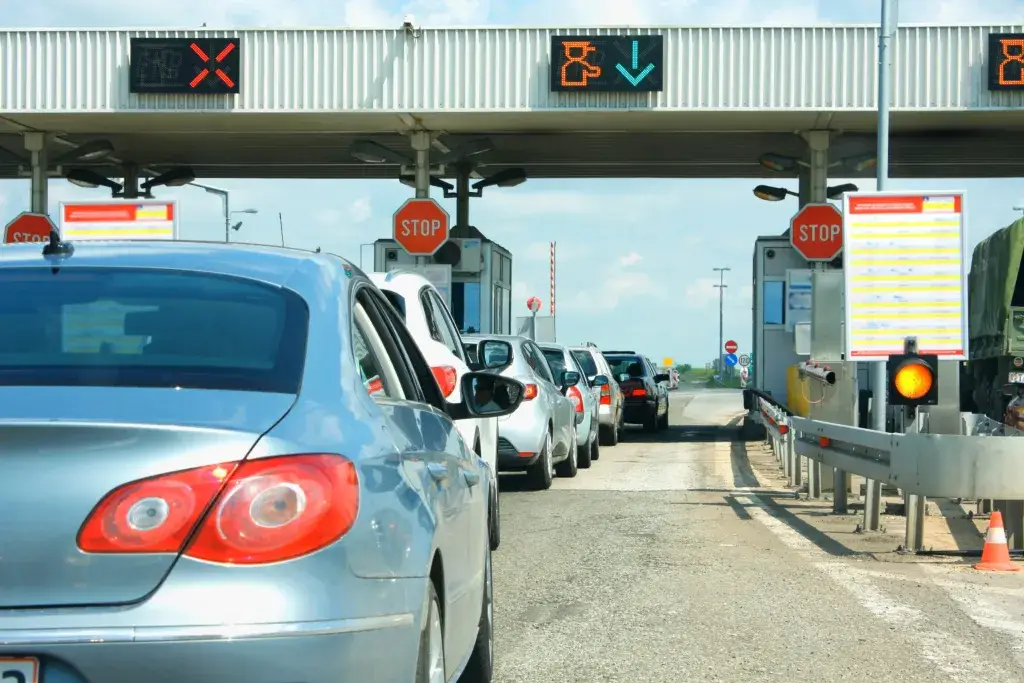
Dacă te întrebi pe ce drumuri trebuie rovinieta, trebuie să știi că aceasta este obligatorie pe toată rețeaua de drumuri naționale, inclusiv autostrăzile și drumurile expres. Legislația permite exceptarea de la plata rovinietei doar pentru sectoarele de drum național din intravilanul municipiilor și doar între indicatoarele rutiere care marchează intrarea, respectiv ieșirea de pe aceste teritorii.
All other state-owned roads of national interest fall within the scope of rovinieta charging for motor vehicles. This category includes:
- highways;
- expressways;
- European-level national roads;
- drumurile naționale principale;
- drumurile naționale secundare.
Rovinieta payment is checked using fixed cameras placed in various areas, especially in border areas.
The road toll must be paid before driving on toll roads and applies equally to vehicles registered in Romania and vehicles from other countries. Of course, the rovinieta can be paid by both individuals and legal entities.
An important point to remember about applying the rovinieta legislation is that the amount paid varies by vehicle category.
This is very important to remember, especially for business owners with mixed vehicle fleets, who must pay close attention to payment dates, rovinieta expiration dates, and above all the category each vehicle in the fleet falls into, so they aren’t caught off guard and avoid paying rather costly fines.
Note that tools are now available that can significantly reduce the stress and workload of managing large fleets, both in freight transport and for leasing and car rental companies.
The GPS fleet monitoring systems allow, in addition to knowing in real time, at any moment, the status and location of each vehicle, Road toll payments automatically, especially for international freight or passenger transport.
This eliminates human error and forgetting to pay tolls when entering toll roads, and delivers significant savings by avoiding the financial impact of fines.
De la 1 octombrie 2026, rovinieta se plătește doar pentru patru categorii de vehicule (Legea nr. 226/2023), iar prețul depinde și de clasa Euro:
- Category A – autoturisme, cu maximum 8 locuri pe scaune plus șoferul;
- Category B – vehicule de transport marfă cu MTMA (masa totală maximă autorizată) de cel mult 3,5 tone;
- Category C – microbuze: vehicule de transport persoane cu peste 9 și maximum 23 de locuri pe scaune, inclusiv șoferul;
- Category D – autocare și autobuze cu peste 23 de locuri pe scaune, inclusiv șoferul.
Vehiculele de transport marfă de peste 3,5 tone nu mai plătesc rovinietă: de la 1 octombrie 2026 plătesc TollRo, taxa pe kilometru. Tarifele rovinietei pe categorii și clase Euro sunt în ghidul despre rovinieta în România.
A number of documents are required to get a rovinieta.
Individuals only need the registration certificate or customs documents if the car was imported and temporarily registered.
Legal entities that want a rovinieta need the registration certificate, the payer’s ID card, the lease agreement if the vehicle was acquired through leasing, or customs documents for imported and temporarily registered vehicles.
Rovinieta poate fi achiziționată pe diverse durate de utilizare a drumurilor publice. De la 1 octombrie 2026, perioadele disponibile sunt 1 zi, 10 zile, 30 de zile, 60 de zile și 12 luni. Alegerea perioadei de valabilitate ține de estimările făcute de deținătorii vehiculelor care se pot deplasa de mai multe ori într-o unitate de timp pe drumurile publice.
So if you expect to make fairly frequent trips over the course of a year, a 12-month rovinieta is more cost-effective. Conversely, for vehicles that rarely leave the city – as with local taxi fleets, for example – paying for a one-year rovinieta isn’t justified for every car.
Likewise, vehicles that are only in transit and won’t return to the country very often only need a rovinieta for the minimum period.
There are also some exemptions from paying the rovinieta. For example, vehicles used exclusively for local passenger transport within a single locality, school transport vehicles, cars with temporary license plates, and vehicles of certain state institutions (the Ministries of Defense and Internal Affairs, SRI, SIE, SPP, STS, ISU, ambulances, the Red Cross, etc.), as well as people with disabilities who drive specially adapted vehicles, are not required to pay road tolls.
Road Toll Checks in Bulgaria, Hungary, and Other European Countries – How Vignettes Are Enforced and the Consequences of Not Paying

Rovinieta se poate cumpăra pe portalul oficial etoll.ro, din aplicația TollRo, de la distribuitorii autorizați (inclusiv benzinării), de la punctele de vânzare CNAIR și de la punctele de trecere a frontierei. De asemenea, există posibilitatea plății acestei taxe prin intermediul SMS, valoarea taxei de drum fiind inserată în factura abonamentului de telefonie. Este de menționat că plata prin SMS poate fi realizată doar pentru vehicule înmatriculate în România.
In Romania, if you’ve forgotten the purchase date or the period you paid for, you can check whether your rovinieta is valid online on the website CNAIR. In the online check form, you’ll need to enter the vehicle’s license plate number as well as the chassis number (VIN), which you can find in the registration certificate or the vehicle identity card.
It’s very important to remember that the rovinieta, as well as the vignettes required when crossing borders into other countries, must be paid before actually driving on the toll road networks. Once paid, the vignette is valid from the time the payment is recorded.
Drivers should never underestimate road toll checks. The fixed and mobile cameras used by road authorities in each country are quite effective at identifying vehicles without a valid vignette. At least for freight and passenger transport, fines for being caught on public roads without a valid vignette are very high and can even exceed the toll itself several times over.
That’s why freight and passenger transport companies in particular can benefit from fleet monitoring systems that also provide, as an added feature, the option of automatic toll payment in Hungary or automatic toll payment in Bulgaria, or in other countries depending on the routes the vehicles most often travel.
Smart monitoring systems pay road tolls from the funds that fleet-owning companies make available to the system, without drivers having to stop to do it.
In addition, there is an accurate record at all times of the tolls paid for each individual vehicle, so you can make informed decisions about optimizing routes and required payments.
So, if you’re wondering which roads require the rovinieta, aceasta este obligatorie pe autostrăzi, drumuri expres, europene și naționale, cu excepția sectoarelor de drum național aflate în interiorul municipiilor.
In conclusion, the rovinieta in Romania and the other road tolls in the countries vehicle fleets may pass through are now much easier and more efficient to manage thanks to the automation made possible by technological advances.
This eliminates human error, saves fleet managers a significant amount of work and time otherwise spent keeping each vehicle’s status up to date, and completely avoids the risk of paying fines if road tolls are mistakenly forgotten.
Which Roads Require the Rovinieta – Questions and Answers
1. Which roads require the rovinieta in Romania?
The rovinieta is mandatory when you drive on highways, expressways, and national roads (inclusiv cele europene). Practic, de îndată ce intri pe un drum național, ai nevoie de rovinietă, cu excepția porțiunilor din interiorul municipiilor.
2. Which roads require the rovinieta if I’m only driving between two nearby cities?
If the route includes a national or European road, you need a rovinieta, even if the distance is short. If you drive exclusively on county or local roads, the rovinieta is not required.
3. Which roads don’t require the rovinieta?
Rovinieta nu este obligatorie pe drumurile județene și comunale, pe străzile localităților și pe sectoarele de drum național din interiorul municipiilor.
4. Is the rovinieta also mandatory on European (E) roads?
Yes, if you travel on European roads (for example E60, E85, E81), these are considered national roads, so the rovinieta is mandatory.
5. Do I need a rovinieta if I only drive a few km without getting on a major road?
If you stay on city streets or local secondary roads, you don’t need a rovinieta. But if you go out on main roads (DN, E, highways), then yes.
6. Is the rovinieta mandatory for all vehicle types?
Yes, in general the rovinieta is required for all road vehicles, with a few exceptions (for example motorcycles or certain institutional vehicles), but the general rule is that you must have one on main roads.
7. Can I be fined if I don’t have a rovinieta on a national road or highway?
Yes, the authorities check the rovinieta automatically using video cameras, and you can receive large fines if you drive without a valid toll on roads where it is mandatory.
8. Where and how do I check whether my rovinieta is still valid?
If you no longer remember exactly when your rovinieta expires, you can easily check it online. There are dedicated platforms where you enter the license plate number and chassis number, and the system instantly shows whether your rovinieta is still valid or has expired. It’s a quick check that can save you unpleasant surprises and unnecessary fines.
9. Is the rovinieta also mandatory for foreigners entering Romania?
Yes, even if the vehicle is registered in another country, the rovinieta is mandatory on roads where the toll applies to all vehicles.
10. Are there short roads or sections where you don’t need a rovinieta?
Da, dar doar în interiorul municipiilor: sectoarele de drum național dintre indicatoarele de intrare și de ieșire din municipiu sunt exceptate. Când un drum național traversează un oraș sau un sat, rovinieta rămâne obligatorie.