

As you probably know, in Poland certain sections of the A1, A2 and A4 highways charge a road toll. For cars, the toll only applies on the concession sections (A1 Gdańsk–Toruń, A2 Świecko–Konin and A4 Katowice–Kraków), while the state-run sections A2 Konin–Stryków and A4 Wrocław–Sośnica have been free for cars since July 1, 2023. Trucks over 3.5 tons pay through the e-TOLL system on an extended network of national roads.
How much do road tolls in Poland cost in 2026?
Here are the updated rates for the main toll sections in Poland:
- A2 Świecko–Konin (concessionaire Autostrada Wielkopolska): 138 PLN for cars for the full route, as of March 11, 2026 (up to 40 PLN per toll segment);
- A4 Katowice–Kraków (Stalexport Autostrada Małopolska): 18 PLN per toll gate for cars (36 PLN for the full route), as of April 1, 2026 – the concession expires in March 2027, after which the section will be taken over by the state;
- A1 Gdańsk–Toruń (AmberGO): 29.90 PLN for cars for the full route, with free-flow payment via the AmberGO video tolling system;
- A2 Konin–Stryków and A4 Wrocław–Sośnica: free for cars since July 1, 2023;
- Trucks over 3.5 tons (e-TOLL): new rates as of February 1, 2026 – between 0.41 and 1.07 PLN/km on highways and expressways, depending on weight and emission class, plus an expanded tolled road network;
- Fines: 500 PLN for cars and up to 1,500 PLN for vehicles over 3.5 tons driving without paying the toll.
In this article, we'll present the existing methods for paying the vignette in Poland, with the rates and rules updated for 2026.
On June 1, 2021, Poland launched the e-TOLL electronic road toll system, which replaced the previous viaTOLL system, fully discontinued on September 30, 2021. As of February 1, 2026, the e-TOLL tolled road network was expanded and the rates were updated.
Unlike viaTOLL, the e-TOLL system for paying the vignette in Poland is based on tracking vehicles via the global navigation satellite system (GNSS). This means that commercial vehicles over 3.5 tons must regularly transmit their location to the Polish system to determine which road tolls they have to pay. For highways and expressways, the rates valid from February 1, 2026 range between 0.41 and 1.07 PLN/km, depending on the vehicle's weight class and emission standard.
How can you pay the vignette in Poland and how can vehicles connect to the new e-TOLL system?
In 2026, Poland offers several ways to pay the vignette and connect vehicles to the e-TOLL system: a compatible on-board unit (OBU – see our devices here), the free e-TOLL PL mobile app, an external location system (ELS/ZSL) or fleet cards accepted in the system. For cars, manual payment at the toll gate remains valid on the concession highways, and free-flow payment via AmberGO operates on the A1 Gdańsk–Toruń.
Manual vignette payment in Poland
- Payment timing
Manual payment applies to cars on the A2 Świecko–Konin and A4 Katowice–Kraków concession highways. The methods differ in when payment is made – when entering the toll zone or when exiting it by car. The Poles themselves call the methods:
- Open (system otwarty) – when payment is made on entry and the upcoming trip is paid for immediately. This is a fairly outdated system that often leads to queues.
- Closed (system zamknięty) – when a ticket is issued on entry, recording when you started driving on the toll road, and on exit you pay for the kilometers actually driven.
It is very important to know the vignette payment method in Poland in advance. Not getting or losing the ticket when the system is closed will mean you have to pay for the entire tolled stretch, regardless of the distance actually driven.
- The method for paying the vignette in Poland
Payments can be made in cash or cashless. Cards from most global networks are accepted (Visa, MasterCard, Maestro).
The vignette in Poland can be paid in zlotys, euros and dollars. However, when paying in cash, change will only be given in Polish currency.
- Service method
A road service officer can collect payment and open a barrier at checkpoints. However, more and more toll plazas are equipped with an automated system. Ticket issuing, distance accounting and payment collection are all automated.
Automated systems only work cashless. At the same time, the lanes at the toll points are narrow and limited. If it turns out that the vignette in Poland at a given lane can only be paid a certain way, then to switch “windows” you'll have to ask a long line of cars to back up to free your vehicle.
OBU (On Board Unit)
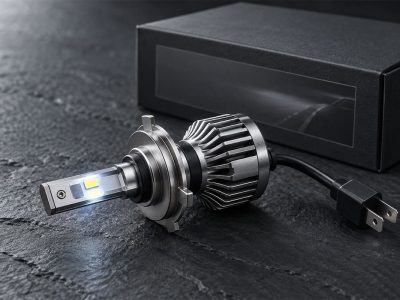
An on-board unit (OBU – see our devices here) approved by the Polish toll authorities can connect to the system e-TOLL.
The OBU (On Board Unit) is designed for electronic payment of the vignette when driving on toll roads.
Once you obtain an on-board unit, you need to read the instructions provided for your specific type of OBU. You will also need to register on e-TOLL and assign the on-board unit to the selected vehicle. The OBU must be installed according to the manufacturer's instructions provided.
OBUs approved for use (those that passed e-TOLL system testing) can be obtained from the OBU operators' distribution network.
This option is the solution we recommend, as it comes with the lowest costs for transport companies. This solution also has the advantage of not requiring a mobile phone, which drivers might forget to charge or accidentally switch off, resulting in fines or errors.
ELS unit (accredited External Location System)
Vehicles can also connect to e-TOLL through an ELS installed in the vehicle. These solutions must be purchased and installed through third-party companies and usually require a subscription fee for their services.
If you are a potential new user of ELS operator services, contact one of the operators listed on the Ministry of Finance website that passed the e-TOLL admission testing (this also applies to their equipment) to verify compliance with the e-TOLL System Requirements. Such an operator will install an ELS unit in the vehicle and activate the e-TOLL service.
If you use ELS units, make sure you register on e-TOLL and assign the ELS unit to the vehicle in which it is installed.
Before buying a device, you must make sure that the device is approved by e-TOLL and that the operator providing the device is approved by e-TOLL.
The e-TOLL mobile app for paying the vignette in Poland
The e-TOLL app for paying the vignette in Poland can be downloaded for free from Google Play or the App Store.
The app lets you pay road tolls, top up and monitor your account balance, and fulfill the obligations of carriers of sensitive goods in the SENT-GEO system.
This solution has several drawbacks. It requires drivers to maintain a permanent connection to the e-TOLL system, meaning constant battery and data usage. If the signal is interrupted, drivers may be fined by the Polish toll authority.
Why choose CargoTrack devices for paying road tolls in Poland?
The benefits you get from purchasing CargoTrack's automatic e-TOLL road toll payment services are:
- Route recording and automatic road toll payment – vehicle data, once entered, stays saved and is sent automatically to the Polish authorities, helping you avoid data errors that can lead to costly penalties.
- Continuous monitoring of devices and correct payment – CargoTrack constantly checks the tracking devices to make sure they transmit accurate information in real time.
- Flexibility to change routes without depending on road tolls – CargoTrack constantly checks the tracking devices to make sure they transmit accurate information in real time.
How does vignette payment work in Poland?
- First, a contract is signed between your company and CargoTrack;
- After the equipment is installed and verified to work correctly, the vehicle registration procedure in the eTOLL system begins;
- A virtual account is created, in which we will register all your vehicle details;
- You are responsible for topping up the virtual account with enough money to cover transit for all vehicles;
- After the registration process, you will be notified by email and SMS about the activation of your vehicle in the e-TOLL system;
- Once you receive confirmation, you can start transiting without any issues, with road tolls paid automatically;
Choose to pay road tolls in Poland | e-TOLL with CargoTrack

Transit Poland, Hungary and Bulgaria with a single toll device, only through CargoTrack services
Frequently asked questions for paying the vignette in Poland
1. Is there a traditional vignette in Poland, like in other European countries?
No, Poland does not use the traditional time-based vignette system. Instead, road tolls are mainly charged based on distance driven or through dedicated electronic systems, depending on the vehicle type.
2. How are road tolls paid in Poland for cars?
For cars, tolls only apply on the concession highways: A2 Świecko–Konin (138 PLN for the full route, as of March 11, 2026), A4 Katowice–Kraków (18 PLN per toll gate, 36 PLN for the full route, as of April 1, 2026) and A1 Gdańsk–Toruń (29.90 PLN, with free-flow payment via AmberGO). The state-run sections A2 Konin–Stryków and A4 Wrocław–Sośnica are free. Payment is made at the toll gates, in cash or by card, or through video tolling apps such as Autopay.
3. What is the e-TOLL system and who has to use it?
e-TOLL is Poland's electronic toll system, used mainly for commercial vehicles and trucks over 3.5 tons. It calculates the toll based on the distance driven on tolled roads.
4. Can I pay road tolls in Poland using a mobile app?
Yes, there are official and partner mobile apps that let you pay tolls without stopping, directly from your phone. They are a practical alternative to traditional payment at toll gates, especially on busy roads.
5. Is a special device mandatory for paying e-TOLL tolls?
Not necessarily. Payment can be made using a mobile app, a dedicated on-board device or a GPS tracking system compatible with e-TOLL requirements.
6. What happens if I drive on a toll road without paying?
Not paying road tolls is punished with fines of 500 PLN for cars and up to 1,500 PLN for vehicles over 3.5 tons. The Polish authorities check routes driven electronically, and the lack of a valid payment is easy to identify.
7. Do the same rules apply to vehicles from other EU countries?
Yes, the rules for paying the vignette in Poland apply equally to vehicles registered in Poland and to those from other EU member states. What matters is that the toll is paid correctly, regardless of the vehicle's country of origin.
8. Are there differences between paying tolls for cars and trucks?
Yes, there are clear differences in paying the vignette in Poland. Cars only pay tolls on certain highways, while commercial vehicles are charged through the e-TOLL system on a much more extensive road network.
9. Can I pay the vignette in Poland in advance?
Depending on the method you choose, yes. Some apps and digital solutions let you top up your account in advance, so tolls are deducted automatically during the trip.
10. Why is it important to choose the right method for paying the vignette in Poland?
Choosing the right method for paying the vignette in Poland helps you avoid fines, unnecessary stops and delays. Plus, a properly configured digital solution can make travel simpler, faster and easier to manage, especially for hauliers.