

In short: In Spain, autovía-type motorways (marked “A”) are free, while autopistas (marked “AP”) are paid at toll barriers – in cash, by bank card or through the Via-T electronic toll system. However, more and more autopistas have become free as their concessions expired (AP-1, AP-2, AP-4 and large sections of the AP-7), and the AP-68 Bilbao–Zaragoza becomes free on November 11, 2026. Those still tolled include the AP-6, AP-9, AP-46, AP-66 and the Madrid radial motorways, and as of January 1, 2026, rates increased by 3.64% on state-dependent concession motorways and by 2% on those managed by SEITT.
If you choose to travel by car in Spain in the near future, you should leave home well informed about the Spain motorway toll system and the other road tolls required to drive on Spain’s roads.
Motorway tolls in Spain in 2026: what has changed
Spain has gradually removed tolls on many “AP” motorways as private concessions expired. Motorways that have become free:
- AP-1 Burgos–Armiñón – free since December 1, 2018;
- AP-4 Seville–Cádiz and AP-7 Tarragona–Valencia–Alicante – free since January 1, 2020;
- AP-2 Zaragoza–Mediterranean and AP-7 Tarragona–La Jonquera plus Montmeló–El Papiol – free since September 1, 2021;
- AP-7 Alicante bypass – toll-free (free use maintained by the government, becoming permanently free in 2026);
- AP-68 Bilbao–Zaragoza – becomes free on November 11, 2026, when the concession expires; the exception is the sections in the Basque provinces of Álava and Bizkaia, which have announced their own toll system starting December 2026.
Still tolled in 2026: AP-6 (Villalba–Adanero) with its branches AP-51 (Ávila) and AP-61 (Segovia), AP-9 (Ferrol–Portuguese border, Galicia), AP-46 (Las Pedrizas–Málaga), AP-53 (Santiago–Alto de Santo Domingo), AP-66 (Campomanes–León), AP-71 (León–Astorga), AP-7 on the Málaga–Guadiaro (Costa del Sol), Alicante–Cartagena and Cartagena–Vera sections, AP-36 (Ocaña–La Roda), AP-41 (Madrid–Toledo) and the Madrid radial motorways R-2, R-3, R-4, R-5, plus the M-12. On the state-run motorways managed by SEITT (radials, AP-36, AP-41, AP-7 Cartagena–Vera), driving is free every day between 0:00 and 6:00.
The schedule continues: the Ministry of Transport estimates that AP-6, AP-51 and AP-61 will become free in 2029, when the concession expires. At the same time, the Spanish government has officially dropped its plan to introduce per-kilometer charging on autovías (the free motorways), a decision accepted by the European Commission – so the autovía network remains free.
At the same time, if you are a haulier transiting Spain, this will help you find out the fastest toll payment methods for you.
In this article, we will present everything you need to know about motorway tolls in Spain.

Types of motorways in Spain – free and tolled
Autovías – free
Autovía motorways are free, and you can recognize them by their designation with “A” followed by a number (for example, A7).
The downside is that they are often quite congested at entrances and exits.
Autopistas – tolled
Autopista motorways are paid according to vehicle category, and they are designated “AP” followed by a number (for example, AP-9).
They often run alongside autovía motorways, but traffic flows much more freely and you will travel much faster.
Note, however: not all motorways marked “AP” are still tolled. In recent years, as concessions expired, the Spanish state has removed tolls on several major motorways – the AP-1, AP-2, AP-4 and large sections of the AP-7. Details in the section below.
How do you pay the Spain motorway toll?
On most toll motorways, the Spain motorway toll is paid at toll barriers: when entering the motorway you take a ticket, and when exiting you pay the toll for the section traveled – in cash, by bank card or through the Via-T electronic toll system.
An important point is that some motorways in Spain charge according to the vehicle category and the distance traveled on that road section. Others, however, have fixed tolls based on vehicle category, regardless of how many kilometers you drove on the motorway.
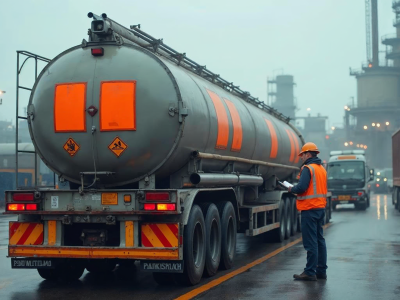
How trucks pay the Spain motorway toll
For trucks, and also for cars that frequently travel in Spain, there is the option of paying the Spain motorway toll through the automatic toll system VIA-T.
The system lets you pass through toll stations without stopping or waiting, an advantage especially at busy times. Using the VIA-T Box device installed in the vehicle, entries to and exits from the motorway are recorded automatically.
Note, however, that using this device involves paying additional fees on top of the motorway tolls.
You can find more about this device here.
Vehicle categories for the Spain motorway toll
Like other European countries, Spain has implemented tolling based on vehicle category.
The Spanish classification of these categories is:
- Category 1 – Light vehicles (Ligeros)
-motorcycles with or without a sidecar, passenger cars with or without a trailer, the trailer having 1 axle with 2 wheels.
-vans and minibuses with 2 axles and 4 wheels.
- Category 2 – Heavy vehicles 1 (Pesados 1)
-trucks and buses with 2 axles.
-trucks and buses with 3 axles, trucks and buses with 2 axles plus a 1-axle trailer.
-passenger cars, vans and minibuses, all with 2 axles and 4 wheels on the rear axle (dual tires).
- Category 3 – Heavy vehicles 2 (Pesados 2)
Vehicle combinations with a total of 4 or more axles; passenger cars, buses and caravans
with 2-axle trailers or at least 1 axle with 4 wheels (dual tires).
How much is the Spain motorway toll?
For each motorway, the amounts differ depending on the system of each motorway operator in Spain.
As a guide, for category 1 – light vehicles (Ligeros), driving the entire AP-68 Bilbao–Zaragoza (approximately 292 km) currently costs about 39.90 euros; for heavy vehicles, the rates are significantly higher. As of January 1, 2026, rates increased by 3.64% on state-dependent concession motorways (4.68% on the AP-46 Málaga) and by 2% on motorways managed by SEITT.
So, here you will find information on the tolls for each motorway.
Bridge and tunnel tolls in Spain
In addition to motorway tolls in Spain, you will also have to pay tolls for bridges and tunnels.
The approximate prices for a passenger car are: Túnel del Cadí (C-16) – about 14.56 euros, Túneles de Vallvidrera (Barcelona) – about 5.28 euros, Túneles de Artxanda (Bilbao) – about 1.55 euros.
Our road toll payment solutions
If you frequently travel through European countries, our articles cover the road toll payment system for every country in Europe.
What’s more, if Hungary, Bulgaria OR Poland are your frequent destination or transit countries, we offer installation of road toll payment devices – HUGO, BGTOLL, and eTOLL – to the highest standards.
For efficient fleet management, we recommend the eTMS system – the best system for streamlining your fleet's operations, built to the highest standards.
Want to learn more about our services? Contact us now!
Frequently asked questions
How do I pay the motorway toll in Spain?
On most toll motorways in Spain, you take a ticket at the toll barrier when entering, and when exiting you pay the toll for the section traveled – in cash, by bank card or through the Via-T electronic toll system. Some motorways charge by vehicle category and distance traveled, while others have fixed tolls per vehicle category, regardless of the kilometers driven.
Which motorways in Spain are still tolled in 2026?
Still tolled are the AP-6 (Villalba–Adanero) with its branches AP-51 and AP-61, the AP-9 in Galicia, the AP-46 (Las Pedrizas–Málaga), AP-53, AP-66, AP-71, the AP-7 on the Málaga–Guadiaro, Alicante–Cartagena and Cartagena–Vera sections, the AP-36, AP-41 and the Madrid radial motorways R-2, R-3, R-4, R-5, plus the M-12. On the state-run motorways managed by SEITT, driving is free every day between 0:00 and 6:00.
Which motorways in Spain have become free?
As concessions expired, Spain removed tolls on the AP-1 Burgos–Armiñón (since December 1, 2018), the AP-4 Seville–Cádiz and AP-7 Tarragona–Valencia–Alicante (since January 1, 2020), and the AP-2 Zaragoza–Mediterranean and AP-7 Tarragona–La Jonquera plus Montmeló–El Papiol (since September 1, 2021). The AP-68 Bilbao–Zaragoza becomes free on November 11, 2026, except for the sections in the Basque provinces of Álava and Bizkaia, which have announced their own toll system starting December 2026.
How much is the motorway toll in Spain?
The amounts differ depending on the system of each motorway operator. As a guide, driving the entire AP-68 Bilbao–Zaragoza (about 292 km) costs approximately 39.90 euros for light vehicles, while for heavy vehicles the rates are significantly higher. As of January 1, 2026, rates increased by 3.64% on state-dependent concession motorways (4.68% on the AP-46 Málaga) and by 2% on those managed by SEITT.
What is VIA-T and is it worth it for trucks?
VIA-T is Spain’s automatic toll system, recommended for trucks and cars that travel frequently: the VIA-T Box device installed in the vehicle automatically records entries to and exits from the motorway, letting you pass through toll stations without stopping or waiting. Note, however, that using the device involves paying additional fees on top of the motorway tolls.
Are autovía (A) motorways in Spain free?
Yes, autovía motorways – recognizable by the designation “A” followed by a number (for example, A7) – are free, but they are often congested at entrances and exits. The Spanish government has officially dropped its plan to introduce per-kilometer charging on autovías, a decision accepted by the European Commission, so the network remains free.