

In short: Belgium has no vignette for cars — vehicles under 3.5 tons travel for free, the only exception being the Liefkenshoek tunnel, where passage costs roughly between €4.40 (with Teletol) and €8 (cash). Trucks over 3.5 tons, on the other hand, pay a per-kilometer toll through the Viapass system, with a mandatory OBU on board. As of July 1, 2026, Flanders introduced a CO2 surcharge, Wallonia raised rates by about 5.7% on average, and indicative rates for a Euro 6 truck in CO2 class 1 range from €0.061/km to €0.285/km, depending on region and weight.
If Belgium is your next destination as a tourist or a haulier, you should set off well informed about the road tolls that come with the Belgium vignette.
Road tolls in Belgium in 2026: what has changed
As of July 1, 2026, Flanders introduced a CO2 component into per-kilometer charging: in addition to region, maximum authorized weight and Euro class, the rate now also depends on one of five CO2 emission classes (class 1 for the most polluting vehicles, class 5 exclusively for zero-emission vehicles). Vehicles registered before July 1, 2019 automatically get class 1 — which is the case for about 93% of the current fleet.
- Flanders: CO2 surcharge as of July 1, 2026; for a 40 t Euro 6 combination in CO2 class 1, the increase can reach about 40%. Zero-emission vehicles (class 5) pay much lower rates (for example €0.038/km over 32 t, compared to €0.285/km for class 1).
- Wallonia: average increase of about 5.7% as of July 1, 2026, per the SOFICO decision.
- Brussels: rates indexed annually, as in previous years.
- Obligation for all hauliers: the CO2 class must be registered with the OBU provider (for example Satellic, via the Road User Portal) for all tolled vehicles, even if they only drive in Wallonia or Brussels.
- Annual indexation of rates moves to January 1, starting in 2027.
- Liefkenshoek tunnel: rates were updated as of January 1, 2026; for cars, passage costs roughly between €4.40 (with Teletol) and €8 (cash), depending on the payment method.
For cars, there is still no vignette or road toll in Belgium in 2026, except for the Liefkenshoek tunnel. Possible per-kilometer charging for cars is only being discussed at the federal level, with no implementation date set.
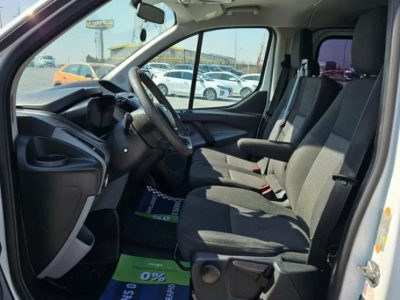
If you're driving your own car, we have great news: you don't have to pay a vignette! Belgium road tolls only apply to vehicles with a maximum authorized weight over 3.5 tons.
However, no matter what type of vehicle you travel in, you will have to pay a Belgium road toll for the Liefkenshoek tunnel, the only toll section that applies to cars too.
In this article, we'll walk you through everything you need to know about buying the Belgium vignette and other road charges in Belgium, so you're ready to hit the road anytime, worry-free.
And if you're looking for road toll payment solutions in the other countries you'll be crossing, on the CargoTrack website you'll find information for every country in Europe.

Free Belgium vignette for cars
For cars, Belgium does not require a vignette, so you're spared that effort. It's a considerable advantage if you're a tourist in Belgium.
Still, you need to pay attention to traffic rules and to the toll for the Liefkenshoek tunnel, where every vehicle is charged.
Belgium vignette for trucks
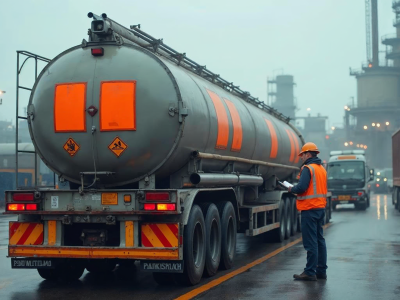
As for the Belgium road toll for trucks, vehicles with a maximum authorized weight over 3.5 tons don't buy a traditional vignette; instead, they pay a per-kilometer toll through the Viapass system.
Truck drivers will also have to pay the Liefkenshoek tunnel toll, which you'll learn more about below.
To this end, Belgium introduced the Viapass system in April 2016, replacing the Eurovignette with per-kilometer charging.
As a result, all vehicles over 3.5 tons must be fitted with an OBU (On Board Unit).
The OBU records the kilometers driven and calculates the amount due based on the region (Flanders, Wallonia or Brussels), the maximum authorized weight, the Euro emission class and, as of July 1, 2026, the vehicle's CO2 emission class as well.
Installing it is quick and mandatory to avoid Belgium's hefty fines for not paying the Belgium vignette.
How can you buy the Belgium vignette?
To pay the road toll in Belgium, you can get the Satellic OBU online, via the Road User Portal, or from Satellic service points located at borders and gas stations. Alternatively, you can use an accredited European Electronic Toll Service (EETS) provider.
These points of sale are for both picking up the device and returning it once you finish your route through Belgium. So, as long as you're on Belgium's roads, you need to have the OBU on board, and at the end of your trip you can easily return it at other points of sale.
More about buying the Belgium vignette can be found here.
How does the Viapass system charge you?
Depending on the region you're driving in, the Euro emission class, the CO2 class and the vehicle's maximum authorized weight, the OBU automatically calculates the per-kilometer rate. As a guide, for a Euro 6 truck in CO2 class 1, rates valid from July 1, 2026 range from €0.061/km (Wallonia, 3.5–12 t category) to €0.285/km (Flanders, over 32 t).
Official, up-to-date rates for each region can be found on the Viapass website.

Liefkenshoek tunnel tolls
A usage toll also applies to the Liefkenshoek tunnel (Antwerp). The tunnel is 1.37 km long, and the toll is charged by vehicle category: category 1 (vehicles under 3 m high) and category 2 (vehicles 3 m high or taller), the latter with reduced rates at night.
This toll is paid at the tunnel's toll plaza — in cash, by bank card or, at a preferential rate, with a Teletol subscription.
Click here to see all the details on the tolls charged by the tunnel operator. Keep in mind that rates were updated as of January 1, 2026.
Our road toll payment solutions
If you're about to travel to other European countries, here you'll find articles about the road toll payment system in every country in Europe.
For frequent transit through countries such as Hungary, Bulgaria OR Poland, we offer top-standard devices for automatic toll payment. This way, you avoid stress and a lot of wasted time.
For more efficient management of your management of your vehicle fleet, we recommend the eTMS system – the best system for streamlining your fleet's operations, built to the highest standards.
Need more information? Contact us now!
Frequently asked questions
Is a vignette mandatory in Belgium for cars?
No. For cars, there is no vignette or road toll in Belgium in 2026. The only exception is the Liefkenshoek tunnel in Antwerp, where every vehicle pays a passage toll.
How do I pay the road toll in Belgium for trucks?
Vehicles with a maximum authorized weight over 3.5 tons don't buy a traditional vignette; they pay a per-kilometer toll through the Viapass system, with a mandatory OBU on board. The Satellic OBU can be obtained online via the Road User Portal or from service points at the border and at gas stations; alternatively, you can use an accredited EETS provider.
How much is the road toll in Belgium for a truck?
As a guide, for a Euro 6 truck in CO2 class 1, rates valid from July 1, 2026 range from €0.061/km (Wallonia, 3.5–12 t category) to €0.285/km (Flanders, over 32 t). The exact rate depends on the region, maximum authorized weight, Euro class and CO2 emission class.
What changed in Belgium's road tolls in 2026?
As of July 1, 2026, Flanders introduced a CO2 surcharge into per-kilometer charging — for a 40 t Euro 6 combination in CO2 class 1, the increase can reach about 40% — and Wallonia raised rates by about 5.7% on average. Vehicles registered before July 1, 2019 automatically get CO2 class 1, which applies to about 93% of the current fleet.
Do I have to register my truck's CO2 class?
Yes. The CO2 class must be registered with the OBU provider (for example Satellic, via the Road User Portal) for all tolled vehicles, even if they only drive in Wallonia or Brussels.
How much does it cost to go through the Liefkenshoek tunnel?
For cars, passage costs roughly between €4.40 (with a Teletol subscription) and €8 (cash), according to the rates updated as of January 1, 2026. The toll is paid at the tunnel's toll plaza — in cash, by bank card or, at a preferential rate, via Teletol — and differs between category 1 (vehicles under 3 m high) and category 2 (3 m or taller), the latter with night discounts.