

In short: France has no road vignette: every highway is paid per section, based on vehicle class and distance traveled, at toll stations or via Liber-t electronic tolling. Since February 1, 2026, rates have risen by an average of 0.86%. As a guide, a class 1 passenger car pays about 25.20 euros on Calais – Paris, 41-42 euros on Paris – Lyon and roughly 69.40 euros on Paris – Marseille; for trucks (classes 3 and 4), rates are about 2-3 times higher. On barrier-free free-flow sections (A13, A14, A79), you must pay within 72 hours, online, with an electronic toll badge or at partner outlets; otherwise you risk a 90-euro surcharge and a fine of up to 375 euros.

France has a well-developed highway network, and it pays to know what France's highways cost before you hit the road. In this article, you'll find everything you need to know about highway tolls in France.
Highway tolls in France in 2026: what has changed
Since February 1, 2026, toll rates on France's concession network have risen by an average of 0.86%, following increases of 0.92% in 2025 and 3% in 2024. The increase varies by operator: Cofiroute (Vinci Autoroutes) applied the largest hike, 1.21%, followed by SAPN (+1.0%), APRR (+0.94%) and AREA (+0.95%), while Sanef raised rates by 0.70% and ASF and Escota by just 0.62%.
If you cross the English Channel to the UK, the system changes completely: there is no vignette, only tolls on specific sections and tunnels. The details are in our guide to highway tolls in England.
As a guide, for a class 1 passenger car in 2026 you pay about 25.20 euros on the Calais – Paris route (A26/A1), around 41-42 euros on the Paris – Lyon route (A6) and roughly 69.40 euros for the entire Paris – Marseille route (A6 + A7). For trucks (classes 3 and 4), rates are about 2-3 times higher, and the exact cost per route can be calculated on autoroutes.fr or on the operators' websites (sanef.com, vinci-autoroutes.com).
The most important change in recent years remains the expansion of barrier-free tolling, known as free-flow (péage à flux libre). After the A79 (Allier), the system was rolled out across the Paris – Normandy corridor: the A13 and A14 run entirely on free-flow, and barrier-free toll gantries also exist on the A4 (Boulay interchange), A10 (Tours Nord) and A837 (Tonnay-Charente). Cameras on the gantries read license plates, and drivers without an electronic toll badge must pay within 72 hours: online at sanef.com (for the A13/A14) or aliae.com (for the A79), or in cash/by card at partner outlets in the Nirio network. Late payment triggers a 90-euro surcharge, and the fine can reach 375 euros.
For frequent travelers in France, a Liber-t electronic toll badge (Ulys from Vinci, Bip&Go from Sanef, or Fulli) remains the most convenient solution: it works across the entire network, including free-flow sections and most highways in Spain, Portugal and Italy, with subscriptions starting at about 1.70-2.20 euros per month of use.
Whether you're a tourist in France visiting Paris or other well-known areas, or you're passing through the country or making a delivery, this article gives you the details you need to set off with peace of mind.
What you need to know about paying highway tolls in France
It is important to note that France has no vignette for road tolls. Instead, there is an eco-vignette that classifies your vehicle by emission level. All roads are paid based on the applicable tolls, the vehicle category, the distance traveled and even the day and time you drove.
You pay at the toll stations when you exit the highway section you traveled, based on where you entered the highway.
All highways are tolled. There are a great many of them, and along the way you'll find free parking areas, gas stations and small restaurants. It's very important to know that these are not open 24/7, as is common in Romania. When planning your route, especially if you drive mostly at night, keep in mind the reduced hours of gas stations and restaurants.
In addition, France applies a surcharge on highways and roads on weekends, as well as during certain time slots that are often posted along the highway.
France highway tolls by vehicle category

The amount of a highway toll in France will vary depending on how your vehicle is classified under French standards. There are 5 vehicle classes and 3 criteria used to assign them:
- Total height of the vehicle or vehicle combination;
- Maximum authorized weight – MTMA (for vehicle combinations, only the MTMA of the towing vehicle is taken into account);
- Number of axles of the vehicle or vehicle combination.
The 5 classes are:
- Class 1 – vehicles with a total height of up to and including 2 m and an MTMA of 3.5 tons or less.
Vehicle combinations with a total height of up to and including 2 m and a towing vehicle MTMA of 3.5 tons or less. - Class 2 – vehicles with a total height between 2 m and 3 m inclusive and an MTMA of 3.5 tons or less.
Vehicle combinations with a total height between 2 m and 3 m inclusive and a towing vehicle MTMA of 3.5 tons or less. - Class 3 – 2-axle vehicles with a total height over 3 m.
2-axle vehicles with an MTMA over 3.5 tons. - Class 4 – vehicles with more than 2 axles and a height of at least 3 m or an MTMA over 3.5 tons.
Vehicle combinations with a total height of at least 3 m.
Vehicle combinations with an MTMA over 3.5 tons. - Class 5 – motorcycles, motorcycles with sidecars, trikes.
How do I pay highway tolls in France?
The toll can be paid in cash (in euros) or by bank card (CB, Visa, Mastercard) at highway toll stations. Note, however: on free-flow sections (péage à flux libre) – such as the A13, A14 or A79 – there are no more barriers or toll booths, and payment is made online, with an electronic toll badge or at partner payment outlets, within 72 hours of passing.
The France highway toll can also be paid with the Liber-t electronic toll system (badges such as Ulys, Bip&Go or Fulli), using a windshield-mounted device that lets you pass through the dedicated lane at up to 30 km/h. Subscriptions start at about 1.70-2.20 euros per month of use, and on free-flow highways the badge handles payment fully automatically, with no stopping.
You can find more about highway toll amounts in France here.
Where do I pay highway tolls in France?
Whether you're paying the France highway toll for a passenger car or for a truck, you'll pay at the toll stations at the highway exit.
On conventional highways with barriers, you pay at the toll stations, while on free-flow sections (for example, the A13/A14 in Normandy or the A79) you can pay online on the operator's website (sanef.com or aliae.com, respectively) within 72 hours of passing. At toll stations, you can pay:
- in cash (in euros);
- by bank card (CB, Visa, Mastercard);
- with the Télépéage Liber-t system.
These toll stations are located at highway exits, and the toll amount will depend on where you entered the highway, your vehicle category and the distance traveled.
You can find the full map of toll stations here.
France highway tolls for trucks
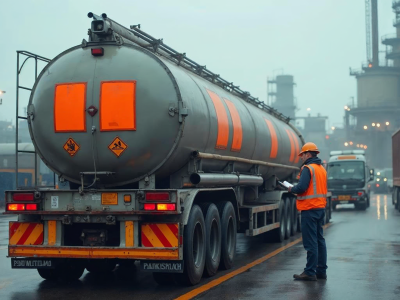
If you're a haulier, you can likewise choose to pay in cash or by card at the toll stations at the highway exit. Trucks with 2 axles and an MTMA over 3.5 tons fall into class 3, while those with 3 or more axles (including tractor unit + semi-trailer combinations) fall into class 4, with tolls charged based on class and distance traveled.
However, a simpler option for truck highway tolls is to install the Télépéage Liber-t device on the vehicle, which lets you pay simply by driving through the Télépéage Liber-t toll lane at up to 30 km/h.
France eco-vignette

France has joined the countries that have introduced, and in fact require, an eco-vignette.
The purpose of this vignette is to classify your car by its emission level. The vignette is affixed to the right side of the windshield, at the top or bottom.
Currently, the Crit’Air vignette is mandatory in low-emission zones (ZFE) in many French cities – including Paris, Lyon, Marseille, Grenoble, Strasbourg, Toulouse, Rouen, Nice, Montpellier, Reims and Saint-Étienne – and the list of restricted zones keeps growing.
The green sticker is for electric cars, and beyond that there is a range of colors based on the car's emission level as stated in its registration certificate. Cars built before 1997 do not receive these stickers.
The eco-vignette costs about 3.81 euros (with delivery in France; slightly more for delivery abroad) and is valid indefinitely for the car it was purchased for. The eco-vignette is issued per license plate number.
To buy the France eco-vignette, use the official website certificat-air.gouv.fr.
Fines for not paying highway tolls in France
Since every highway is tolled, there's no way to get by without paying the France highway toll or getting a fine.
If you don't pay the highway toll in France, you face serious penalties. On free-flow sections, failure to pay within 72 hours triggers a flat 90-euro surcharge (reduced to 10 euros if you pay within 15 days of receiving the notice), and if the case goes to court, the fine can reach 375 euros.
You also need to watch the speed limit on your route, because speeding fines are also steep:
- up to 19 km/h over, where the limit is 50 km/h: 135 euros and 1 point;
- up to 19 km/h over, where the limit is above 50 km/h: 68 euros and 1 point;
- 20-29 km/h: 135 euros and 2 points;
- 30-39 km/h: 135 euros, 3 points and a 3-year driving ban;
- 40-49 km/h: 135 euros, 4 points and a 3-year driving ban;
- over 50 km/h: 1,000 euros, 6 points and a 3-year driving ban;
- repeat speeding over 50 km/h: 3,000 euros, 6 points, a 3-year driving ban, vehicle confiscation and up to three months in prison;
How to avoid highway tolls in France
To avoid highways and their tolls, you can choose expressways instead. However, the speed limit there is 80 km/h. To find the best route options in France, visit autoroutes.fr.
Watch the speed limits on French roads! (see the previous section)
Tunnel and bridge tolls in France
If you choose to drive in France, keep in mind that tunnels and bridges are tolled too; you can find a list of these prices below:
| Tunnels and bridges | Motorcycles | Passenger cars (class 1) |
|---|---|---|
| Puymorens Tunnel | 4.60 EUR | 7.80 EUR |
| Maurice-Lemaire Tunnel | 4.10 EUR | 6.80 EUR |
| Normandy Bridge | 0.00 EUR | 5.90 EUR |
| Tancarville Bridge | 0.00 EUR | 2.80 EUR |
| Millau Viaduct (off-season) | 6.80 EUR | 11.30 EUR |
| Millau Viaduct (June 15 – September 15) | 6.80 EUR | 13.80 EUR |
| Fréjus Tunnel one way (from France) | 36.70 EUR | 55.50 EUR |
| Fréjus Tunnel round trip (valid 7 days) | 46.10 EUR | 69.20 EUR |
| Mont Blanc Tunnel one way (from France) | 36.70 EUR | 55.50 EUR |
| Mont Blanc Tunnel round trip (valid 7 days) | 46.10 EUR | 69.20 EUR |
| Prado Carénage Tunnel | 3.30 EUR | 3.30 EUR |
Our road toll payment solutions
CargoTrack offers you the most affordable solutions for transiting countries such as Hungary, Bulgaria OR Poland, through vehicle-mounted devices that automatically handle your road toll payments.
Need a toll device for France? We can help, Contact us now!
For efficient management of your transport company, the eTMS service gives you the tools to manage and monitor every factor that affects your business.
Frequently asked questions
How much do highway tolls cost in France in 2026?
Since February 1, 2026, toll rates have risen by an average of 0.86%. As a guide, for a class 1 passenger car you pay about 25.20 euros on the Calais – Paris route (A26/A1), around 41-42 euros on Paris – Lyon (A6) and roughly 69.40 euros on the Paris – Marseille route (A6 + A7), while for trucks (classes 3 and 4) rates are about 2-3 times higher.
Is there a highway vignette in France?
No, France has no vignette for road tolls: all highways are tolled per section, based on vehicle category, distance traveled and even the day and time you drive. There is, however, the Crit’Air eco-vignette, which classifies vehicles by emission level and is mandatory in low-emission zones (ZFE) in many French cities.
How do I pay the highway toll in France?
On conventional highways, you pay at the toll stations at the highway exit, in cash (in euros) or by bank card (CB, Visa, Mastercard), or with a Liber-t electronic toll badge (Ulys, Bip&Go or Fulli), with subscriptions starting at about 1.70-2.20 euros per month of use. On barrier-free free-flow sections, payment is made online, with a badge or at partner outlets, within 72 hours of passing.
What is the free-flow system (péage à flux libre) and which highways does it apply to?
It is barrier-free tolling: cameras on the gantries read license plates, and drivers without an electronic toll badge must pay within 72 hours, online at sanef.com (for the A13/A14) or aliae.com (for the A79), or in cash/by card at partner outlets in the Nirio network. The system runs entirely on the A13 and A14 (Paris – Normandy corridor) and on the A79, plus gantries on the A4, A10 and A837.
What fine do I risk if I don't pay the highway toll in France?
On free-flow sections, failure to pay within 72 hours triggers a flat 90-euro surcharge, reduced to 10 euros if you pay within 15 days of receiving the notice. If the case goes to court, the fine can reach 375 euros.
Which toll class do trucks fall into in France?
Trucks with 2 axles and an MTMA over 3.5 tons fall into class 3, while those with 3 or more axles, including tractor unit + semi-trailer combinations, fall into class 4. Tolls are charged based on class and distance traveled, and payment can be made at toll stations or, more simply, with the Liber-t electronic toll device.